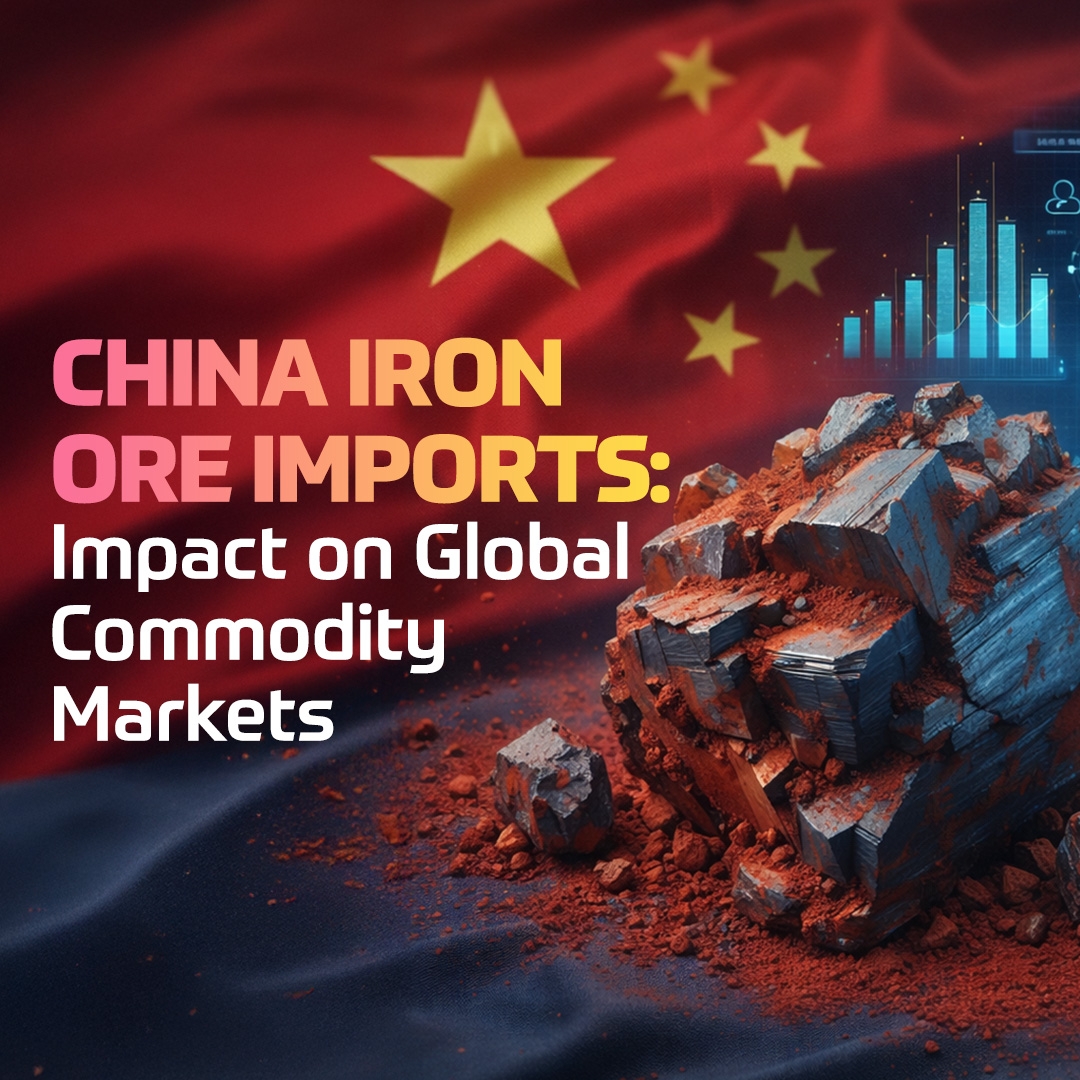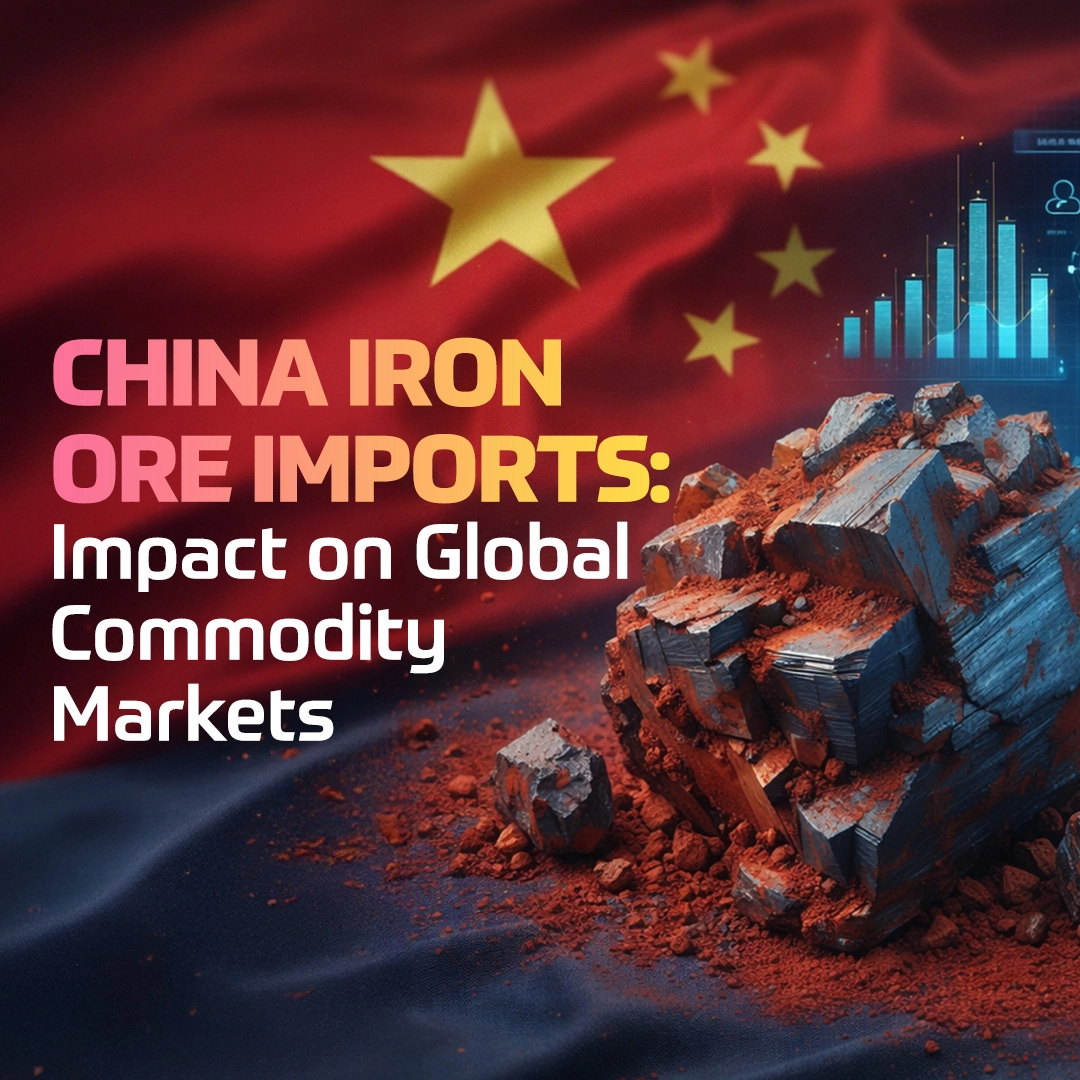
China has long been the cornerstone of global commodity demand, and iron ore sits at the very center of this influence. As the world’s largest steel producer and consumer, China’s iron ore import behavior directly shapes global pricing, trade flows, freight markets and investment strategies. Understanding China iron ore imports is therefore essential for exporters, traders, logistics providers and policymakers seeking to navigate volatility in global commodity markets.
This article examines China’s dominant role in
the iron ore market, recent import trends, major supplier countries, logistical
dynamics, risk factors and what China’s future import trajectory signals for
global markets, supported by a strategic lens aligned with TradeAtlas’
data-driven trade intelligence approach.
1. Overview of China’s Role in the Global Iron Ore Market
China accounts for more than two-thirds of the global
seaborne iron ore trade, making it the single most influential buyer worldwide.
The country’s steel sector underpins massive infrastructure development,
urbanization, real estate construction and manufacturing output. As domestic
iron ore resources are generally lower-grade and more expensive to extract,
China relies heavily on imports to meet steel production requirements.
Fluctuations in China’s iron ore imports ripple
across commodity exchanges, affecting benchmark prices, shipping rates and
mining investments. When China increases imports, global prices often surge;
when demand softens, the impact is felt immediately across producing regions.
1.1. Why China Dominates Global Iron Ore Demand
Several structural factors explain China’s
dominance in iron ore demand:
Scale of steel production: China produces over half of the
world’s crude steel, requiring enormous and consistent iron ore inputs.
Urbanization and infrastructure: Continuous investments in
transportation, energy and housing sustain long-term steel consumption.
Limited high-grade domestic supply: While China has iron ore reserves,
many deposits are low-grade and environmentally costly to process.
Supply chain efficiency: Long-term contracts with major
exporters and advanced port infrastructure support large-volume imports.
Together, these drivers ensure that China's
iron ore imports remain central to global commodity market dynamics.
2. Trends in China’s Iron Ore Imports
Over the past decade, China’s iron ore imports
have shown both resilience and cyclical volatility. Despite economic slowdowns,
real estate adjustments and pandemic disruptions, import volumes have remained
historically high. Key trends shaping recent import behavior include:
- Shift toward higher-grade ore: Chinese
steelmakers increasingly favor high-grade iron ore to improve efficiency and
reduce emissions.
- Inventory-driven volatility: Import
volumes often fluctuate based on port stockpiles rather than immediate
production needs.
- Price sensitivity: When global prices
decline, China tends to increase imports to rebuild inventories.
- Seasonal demand patterns: Construction
cycles and weather conditions influence short-term import timing.
Analyzing China iron ore imports by country
alongside volume trends reveals how sourcing strategies adapt to pricing,
quality and geopolitical considerations.
3. Major Supplier Countries to China Iron Ore Market
China’s iron ore imports are highly
concentrated among a limited number of supplier countries, making sourcing
strategies a critical factor in global commodity trade. Australia stands as
China’s largest iron ore supplier, supported by geographic proximity,
large-scale production capacity and consistent ore quality, while Brazil plays
a key role by providing high-grade iron ore that aligns with China’s efficiency
and emissions-reduction goals, despite longer shipping distances.
Secondary suppliers such as South Africa and
India contribute smaller but strategically important volumes, often responding
to short-term demand shifts or price movements. In recent years, emerging
producers like Guinea have gained attention as China seeks to diversify supply
sources and reduce dependency risks, highlighting how China's iron ore imports
by country reflect both economic efficiency and long-term geopolitical
considerations.
4. Logistics, Freight and Infrastructure Considerations
Logistics plays a critical role in shaping
China’s iron ore import costs and reliability. Iron ore is transported
primarily via dry bulk carriers, with freight rates heavily influenced by
China’s import volumes. Key logistics factors include:
Port Infrastructure: China operates some of the world’s
largest bulk ports, enabling efficient unloading and stockpiling.
Freight Rate Volatility: Changes in import demand directly
impact Capesize and Panamax shipping rates.
Supply Chain Resilience: Disruptions such as port
congestion, weather events or labor shortages can delay shipments and drive
price spikes.
Rail and Inland Distribution: Efficient rail networks connect
ports to steel mills, reducing bottlenecks.
As China's iron ore imports fluctuate,
logistics and freight markets adjust rapidly, making transportation data
essential for cost forecasting and contract planning.
5. Risks and Market Uncertainties
Despite its scale and efficiency, China’s iron
ore import system is exposed to multiple risks that can reshape global
commodity markets.
5.1. Policy and Regulatory Risks in China
Chinese government policies significantly
influence iron ore demand. Measures aimed at controlling steel output,
stabilizing property markets or reducing industrial overcapacity can quickly
dampen import volumes. Trade policies, import regulations and strategic reserve
decisions also affect purchasing behavior.
Any abrupt policy shift can reduce China's iron
ore imports, triggering global price corrections and impacting exporters
worldwide.
5.2. Environmental Regulations and Sustainability Pressures
China’s commitment to carbon reduction and
environmental sustainability is reshaping the iron ore market. Stricter
emissions standards push steelmakers toward higher-grade ore, while
discouraging inefficient production.
This transition creates both risks and
opportunities:
- Demand may concentrate further among premium
suppliers.
- Lower-grade producers may face declining
access to the Chinese market.
- Compliance costs could reshape pricing
structures.
Environmental policy is therefore becoming a
key variable in forecasting China's iron ore imports by country.
6. Outlook: What China’s Iron Ore Imports Signal for Global Markets
Looking ahead, China's iron ore imports will
continue to function as a leading indicator for global commodity markets,
offering early signals on price direction, freight demand and investment
sentiment across the mining and steel sectors.
Although China’s long-term steel demand growth
is expected to moderate due to structural shifts in the real estate sector and
a gradual transition toward a more consumption-driven economy, absolute import
volumes are likely to remain structurally high, supported by infrastructure
renewal, industrial upgrading and export-oriented manufacturing.
At the same time, stricter environmental
regulations and carbon reduction targets are expected to accelerate demand for
higher-grade iron ore, reshaping China's iron ore imports by country and
favoring suppliers capable of delivering consistent quality at scale.
As a result, short-term volatility driven by
policy interventions, inventory cycles and macroeconomic uncertainty may
increase, but China’s central role ensures that its iron ore import patterns
will remain a critical benchmark for global commodity pricing, shipping markets
and strategic trade planning.
7. TradeAtlas Insight: Turning China's Iron Ore Import Data into Strategy
Understanding the complexity of China's iron
ore imports requires more than headline statistics. With TradeAtlas, businesses
can analyze China's iron ore imports by country, identify supplier
concentration risks, track long-term volume trends and align sourcing or export
strategies with real trade data.
By transforming raw customs data into
actionable market intelligence, TradeAtlas enables exporters, traders and
logistics firms to anticipate shifts in China’s demand and respond proactively
in an increasingly volatile global commodity environment.
For companies seeking deeper product-level
insights and accurate trade classifications, leveraging a reliable HS code
directory is
essential to analyze iron ore flows, assess compliance requirements, and build
data-driven global trade strategies.