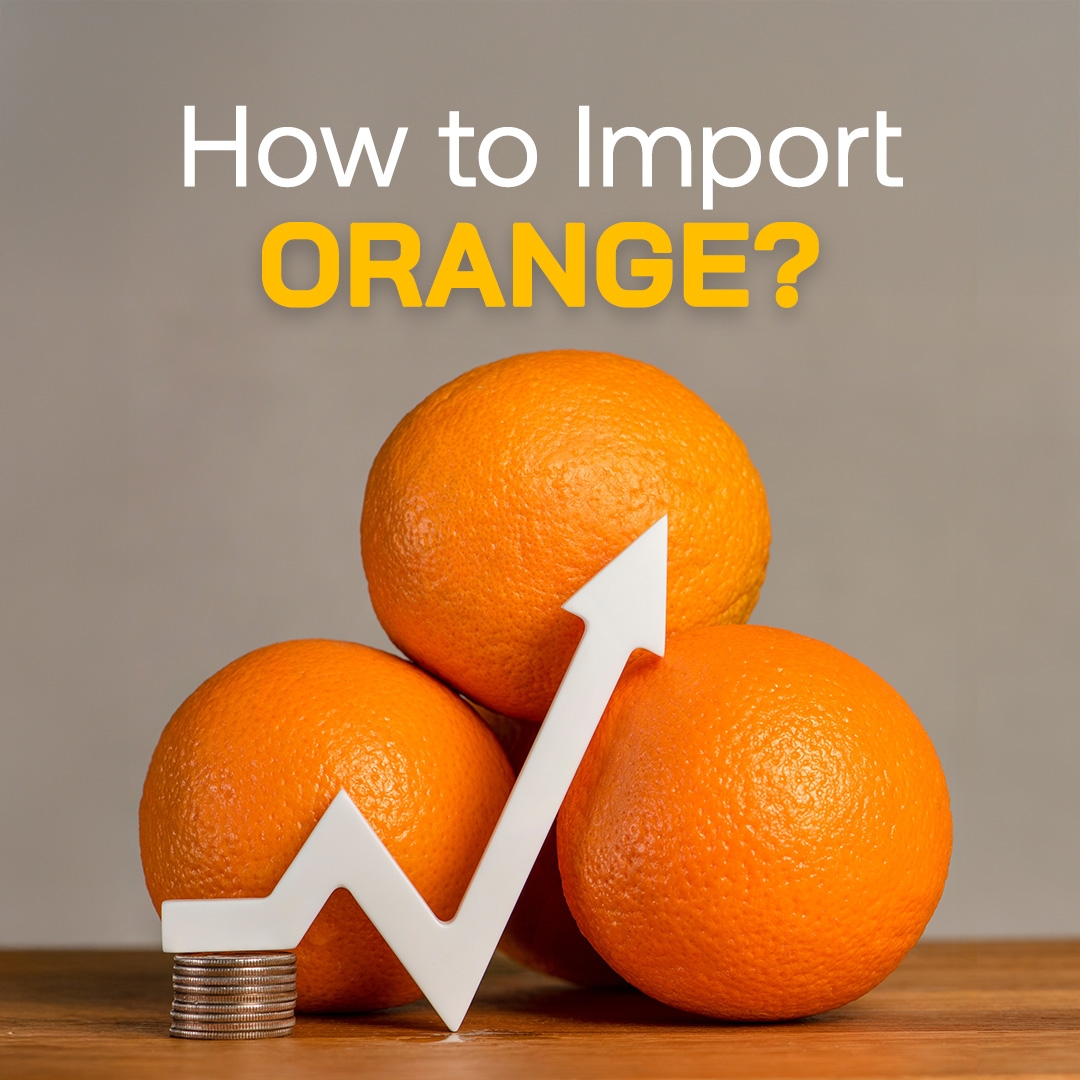
Global fruit trade has made oranges one of the most widely imported citrus products, ensuring year-round supply for markets with high consumer demand. Whether you are a wholesaler, distributor, or part of the juice industry, understanding the dynamics of orange import is essential for building a competitive and profitable business. In certain markets, importers must also comply with strict quality and inspection requirements, making it crucial to understand not only logistics but also regulatory expectations.
Steps to Import Orange Successfully
Unlike many other fruits, orange
import requires attention to seasonality, variety, and logistics:
- Study Seasonal Supply Gaps: Importers should
map the harvest cycles of exporting countries. For instance, Spain
dominates the European market during winter months, while South Africa and
Egypt fill the gap in summer. Importing at the right time avoids
oversupply and ensures better margins.
- Choose the Right Varieties: Consumer
preference varies by market. In the UK, seedless Navel oranges are highly
demanded, while in Middle Eastern markets, Valencia oranges are preferred
for juicing. Selecting varieties aligned with market taste prevents excess
stock.
- Secure Cold Chain Logistics: Oranges must be
transported in refrigerated containers to maintain freshness. Even short
disruptions at ports can reduce shelf life, making strong logistics
partnerships a critical success factor.
- Meet Food Safety Standards: Certifications
like GlobalG.A.P., HACCP, or Organic Certification are not just “added
value” in markets like Canada and the UK—they are often a requirement for
retail entry.
- Diversify Suppliers to Manage Risk: Weather
conditions and fluctuating harvest yields can drive sharp price changes.
Importers who source from multiple countries (e.g., Spain, Egypt, Morocco)
are better protected against shortages.
Orange Import Data
According to Market Calculus
data, global orange imports exceeded 5.28 billion USD in 2024. Germany ranked
first with 0.52 billion USD in imports, while total global imports contracted
by 10.10% compared to the previous year, reflecting a value decline of 0.59
billion USD. The sharpest decreases in value terms were recorded by the
Netherlands, Italy, and Spain. On the other hand, the United States achieved
the highest import growth with an increase of 48.67 million USD, followed by
Russia with 48.60 million USD and South Korea with 27.65 million USD.
From a regional perspective,
European countries, North America, and the Middle East remain the largest
importers. For example, orange imports UK remain significant due to
strong retail demand, while orange imports Canada continue to rise
steadily given the country’s limited local production capacity and reliance on
foreign suppliers.
Orange Export Data
Market Calculus data shows that
Spain led global orange exports in 2024 with over 1.19 billion USD and a 23.33%
market share, followed by Egypt (17.48%) and South Africa (14.84%). While Spain
dominated in both value and volume, price comparisons highlight stark
contrasts: Azerbaijan recorded the highest unit price at 22.00 USD, whereas
Türkiye had the lowest at 0.60 USD despite ranking among the top 10 exporters.
These differences underline how production costs, market positioning, and
quality standards strongly shape export competitiveness. For importers, this
means opportunities vary not only by country but also by the pricing strategies
and market focus of each supplier.
Orange Import Procedures and Documentation
Orange imports require strict
compliance with both customs and food safety regulations. Key documents
typically include a Bill of Lading (B/L) or Air Waybill, a Commercial Invoice
and Packing List, a Phytosanitary Certificate to verify plant health compliance,
a Certificate of Origin for tariff preferences, and, depending on market
requirements, Food Safety or Organic Certifications. In highly regulated
markets such as the EU and Canada, random inspections for pesticide residues
and verification of cold treatment procedures are also common.
Key Importers for Orange Import
According to Market Calculus
data, the largest orange importers in 2024 were Germany, France, the
Netherlands, the United States, Russia, Canada, the United Kingdom, South
Korea, China, and Hong Kong. The top five countries together accounted for
36.33% of global orange imports, while the share of the top ten reached 55.25%.
Price data also highlight
significant differences: among the top five importers, the Netherlands recorded
the lowest unit price at 0.79 USD, while the United States imported the most
premium oranges at 1.30 USD per kilogram.
Overall, global orange imports
contracted by 10.10% in 2024 compared to the previous year, representing a
decline of 0.59 billion USD in value. The sharpest decreases were seen in the
Netherlands, Italy, and Spain. On the other hand, the United States achieved
the highest growth in import value with an increase of 48.67 million USD,
followed by Russia (48.60 million USD) and South Korea (27.65 million USD).
These top importing countries
represent the most lucrative opportunities for exporters, with strong retail
demand and large juice industries driving consistent consumption.
Orange Import Business Opportunities
Orange imports present
significant business opportunities across multiple industries due to their wide
range of uses:
- Retail and Supermarket Chains: Table oranges
remain in high demand year-round, making consistent imports essential for
large retailers.
- Juice and Concentrate Industry: A major share
of orange imports goes to industrial processing, particularly juice, soft
drinks, concentrates, and flavoring production.
- Food Industry: Oranges are widely used in
jams, marmalades, confectionery, desserts, and ice cream manufacturing.
- Pharmaceuticals and Cosmetics: Orange peel
and extracts are valuable for vitamin C supplements, perfumes, and
skincare products.
- Wholesale Trade and HoReCa Sector: Supplying
restaurants, hotels, and catering companies creates continuous demand for
imported oranges.
With growing health awareness and
consumer preference for natural products, the profitability of orange imports
is on the rise, especially for businesses that can offer certified and
traceable supply.
Unlock Orange Import Opportunities with TradeAtlas
Orange import processes are
influenced not only by leading importer and exporter countries but also by the
companies actively engaged in this trade. Finding reliable firms is just as
crucial as understanding market dynamics and regulations. TradeAtlas provides
exactly this advantage by offering access to real shipment records and verified
company profiles from over 200 countries. By using the orange
hs code, businesses can identify top importers and exporters, track
shipment volumes, compare pricing trends, and connect directly with trusted
partners. This data-driven approach helps companies minimize risks, optimize
costs, and seize profitable opportunities in the global orange trade.