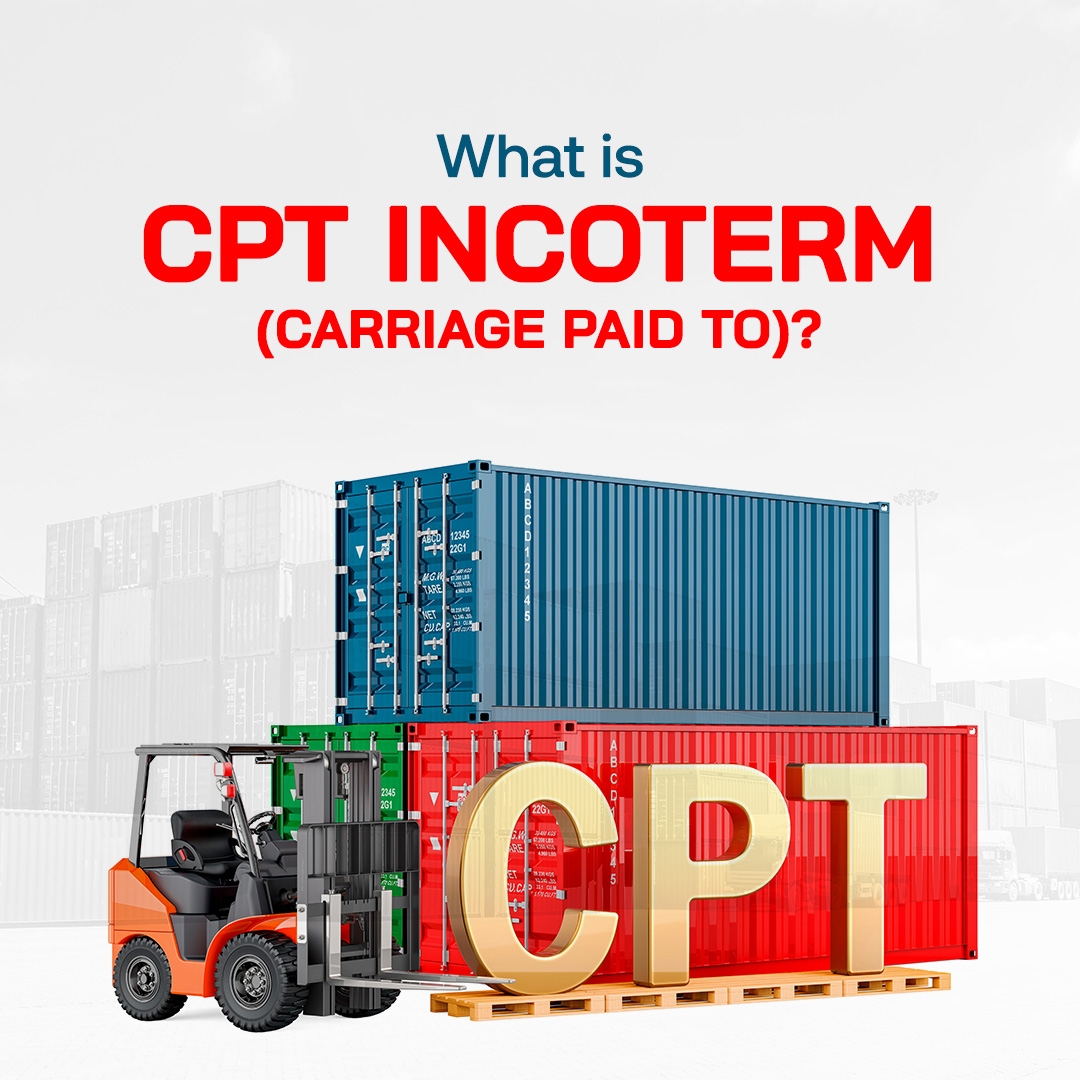
The CPT Incoterm (Carriage Paid To) is one of the trade terms defined by the International Chamber of Commerce (ICC) within the Incoterms framework. It sets out in clear terms the respective obligations of the seller and the buyer in an international shipment. Under CPT, the seller arranges and pays for transport to the agreed destination, but the transfer of risk takes place much earlier—once the goods are handed over to the first carrier. Understanding the CPT terms Incoterms is essential for importers and exporters who want to manage costs, risks, and delivery expectations effectively.
What does CPT Mean in Shipping Terms?
The CPT Incoterms definition
states that the seller delivers the goods to a carrier—or another party
nominated by the seller—at an agreed location and pays the transport costs to
the named destination. However, the CPT Incoterms meaning also
highlights that the risk passes to the buyer as soon as the goods are handed
over to the first carrier, not upon arrival at the final destination. This
combination of seller-paid transport and early risk transfer makes CPT a
versatile choice for both sea and air shipments.
What are the Seller's Responsibilities?
In CPT transactions, the seller
is in charge of preparing the goods and issuing a compliant commercial invoice.
They must deliver the shipment to the carrier at the agreed place and time, pay
all transportation costs to the named destination, and complete export customs
clearance. The seller is also responsible for giving the buyer all necessary
documents to claim the goods upon arrival. While they arrange and pay for
transport, their responsibility for risk ends the moment the goods are handed
over to the first carrier.
What are the Buyer's Responsibilities?
Under CPT terms, the buyer takes
on all risk as soon as the goods are handed over to the first carrier. They are
responsible for arranging and paying for import customs clearance, duties, and
taxes, as well as securing insurance if it has not been otherwise agreed. Any
extra transport costs beyond the named destination also fall to the buyer. In
short, once the goods leave the seller’s control, the buyer is accountable for
any loss, damage, or delay during transit.
Advantages of Shipping CPT for the Buyer
·
Eliminates the burden of planning and organizing
the initial stages of transport.
·
May provide more favorable freight rates through
the seller’s existing shipping contracts.
·
Offers more predictable delivery times to the
destination, making logistics planning easier.
·
Saves the buyer time and reduces administrative
workload at the start of the shipment process, as transportation is managed by
the seller.
Disadvantages of Shipping CPT for the Buyer
·
Risk transfers to the buyer before the goods
reach the final destination.
·
As the seller selects the carrier and determines
the shipping route, the buyer has limited influence over the process.
·
Information flow from the seller regarding the
shipment may be limited, making tracking and issue resolution more challenging.
·
In the event of loss or damage during transit,
the full financial burden falls on the buyer if no insurance is in place.
·
The absence of an insurance requirement
increases the risk of being unprotected.
·
Unforeseen costs such as handling, storage, or
additional transportation at the destination may arise.
CPT Agreements for China Importing: Are They a Good Idea?
When importing from China, CPT
Incoterms can seem appealing for buyers who prefer the seller to manage
export logistics. Many Chinese exporters have established relationships with
carriers, which can lead to competitive freight rates and less administrative
work on the buyer’s side. However, this convenience comes with trade-offs.
Transport costs are often included in the product price, which may reduce
transparency and limit the buyer’s ability to compare rates. Since the seller
selects the carrier and determines the route, delivery schedules might not
always align with the buyer’s needs, especially during peak shipping seasons.
Although export clearance in China is handled by the seller, all import customs
procedures, duties, and taxes at the destination remain the buyer’s
responsibility, along with any additional handling, storage, or local transport
costs. Another key factor is insurance—under CPT rules, the seller is not
obligated to insure the shipment, meaning the buyer bears full financial risk
for any loss or damage after the goods are handed to the first carrier. This
makes supplier reliability critical, as some exporters may prioritize the
lowest-cost transport options over speed or security. For importers with
trusted suppliers and the capacity to manage destination-side risks, CPT can be
a practical choice, but for others, the lack of control and early risk transfer
may outweigh the benefits.
How TradeAtlas Can Support Smarter CPT Decisions
In CPT transactions, accurate and
reliable trade data is key to ensuring a smooth process and avoiding unexpected
costs. TradeAtlas provides global shipment information that allows you to
assess a supplier’s credibility, shipping patterns, and market reach before
committing to a deal. By reviewing historical import and export data and confirming
preferred Incoterms, you can determine whether a supplier has experience
handling CPT arrangements. TradeAtlas also enables you to analyze trade routes
and carrier usage, giving you leverage in negotiations and helping you choose
partners whose logistics align with your delivery goals. With this level of
insight, you can approach CPT agreements with greater confidence, lower risk,
and a stronger position in both pricing and operational performance.
CPT Incoterm FAQs
This section answers the most
frequently asked questions about CPT Incoterms, clarifying how this term works
in practice and what it means for both buyers and sellers in international
trade.
What does CPT mean in Incoterms?
In Incoterms, CPT stands for
‘Carriage Paid To.’ Under this rule, the seller covers the transport costs to
an agreed destination, while the risk transfers to the buyer once the goods are
handed over to the first carrier.
What is the difference between CPT and CIF?
The key differences between CPT
and CIF lie in scope and insurance obligations. CIF (Cost, Insurance and
Freight) applies only to sea and inland waterway transport, and the seller is
required to cover both freight and insurance costs. CPT (Carriage Paid To), on
the other hand, can be used for all modes of transport and does not require
insurance unless the parties agree to include it. Another distinction is the
point at which risk transfers: under CIF, risk passes to the buyer once the
goods cross the ship’s rail, whereas in CPT, risk transfers when the goods are
handed over to the first carrier.
What is the difference between CPT and FOB Incoterms?
The main differences between CPT
and FOB lie in their applicability and the point at which risk transfers. FOB
(Free On Board) is used exclusively for sea shipments. Under FOB, the seller
covers costs and bears the risk until the goods are loaded onto the vessel at
the port of shipment; risk passes to the buyer once the goods cross the ship’s
rail. CPT (Carriage Paid To), on the other hand, can be used for all modes of
transport. The seller delivers the goods to the first carrier and pays for
transport to the agreed destination, but the risk transfers to the buyer at the
moment the goods are handed over to that first carrier—often much earlier than
under FOB.
What is the meaning of CPT?
CPT is an Incoterm that defines a
clear split between cost responsibility and risk. The seller takes care of
arranging and paying for the transport to the destination agreed in the
contract. However, ownership of the risk changes much earlier—once the goods
are handed over to the first carrier in the chain. This means that while the
seller controls and funds the main transport, the buyer assumes responsibility
for anything that might happen to the goods during the journey from that point
onward. The define CPT Incoterms rule is important for both parties to
understand before entering into a shipment contract, as it clarifies who pays
for transportation and when the risk is transferred. In practical terms, the meaning
of CPT Incoterms ensures that the seller organizes and pays for the main
carriage, but the buyer bears the risk from the moment of handover. In short, CPT
Incoterms explained: seller pays for transport to a named destination, risk
transfers to the buyer once goods are handed to the first carrier.