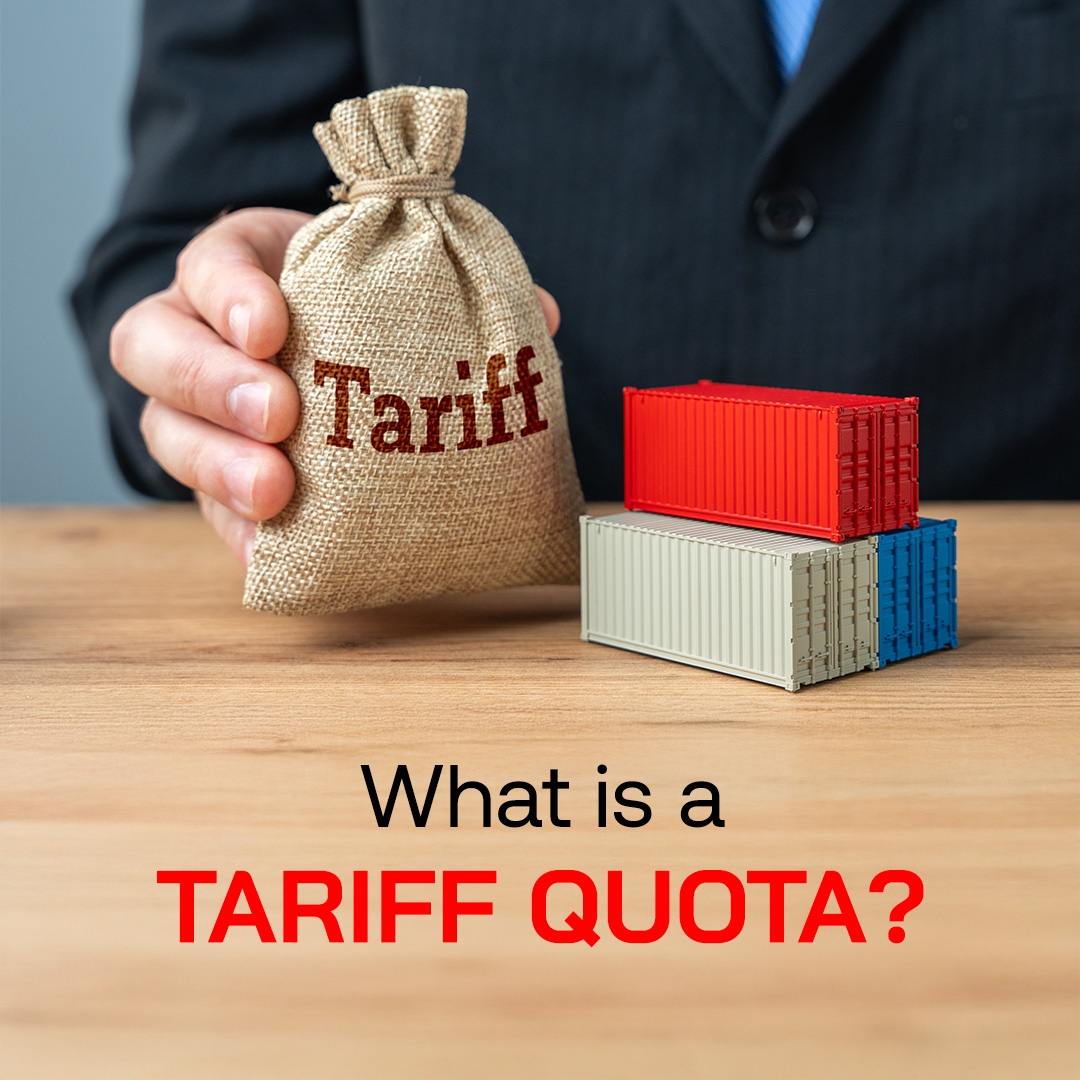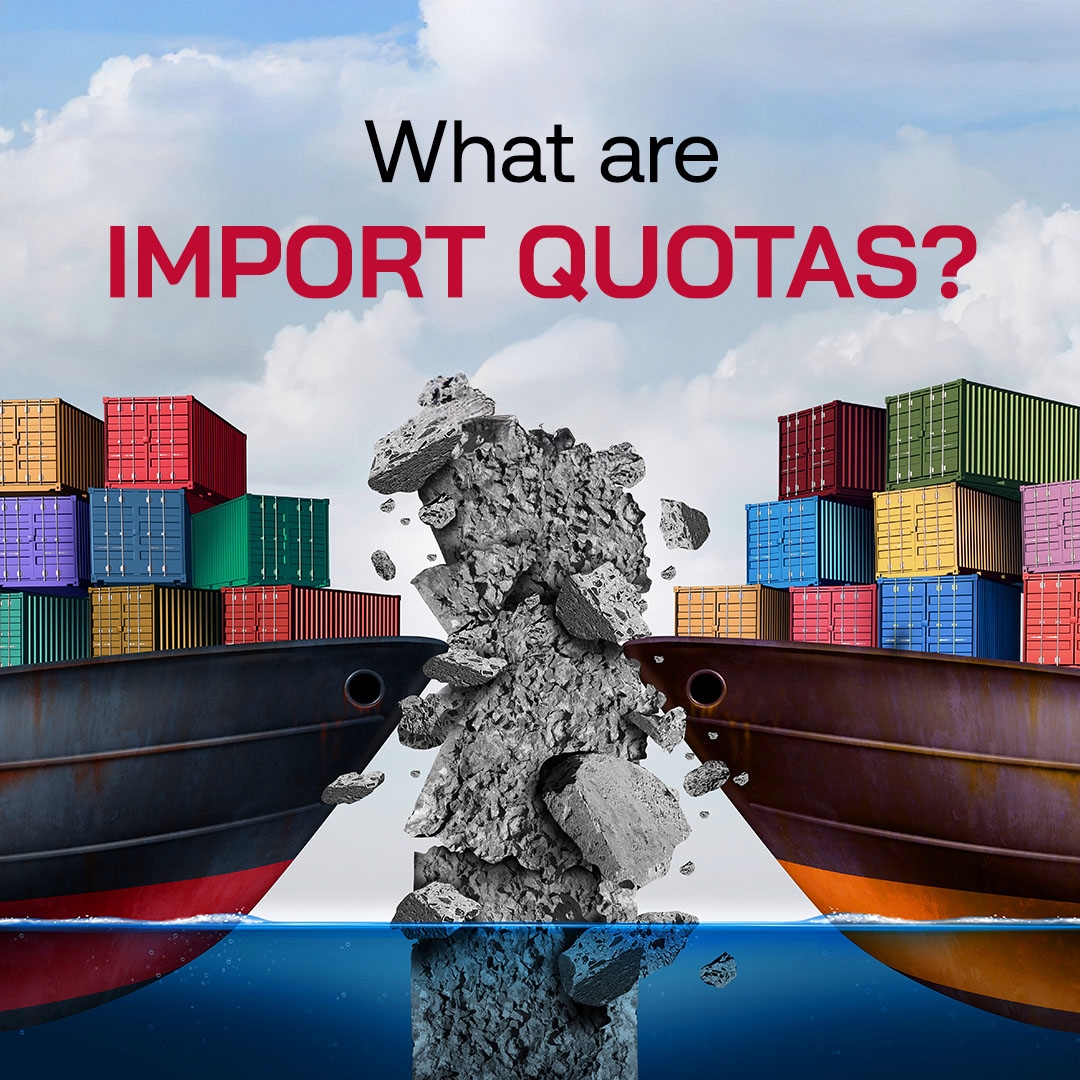
In international trade, countries often walk a fine line between liberalizing markets and protecting local industries. One tool that strikes this balance is the tariff rate quota. This policy instrument allows a certain volume of imports at a reduced tariff rate. Once that volume is surpassed, any additional imports are subject to significantly higher duties. Understanding the tariff rate quota meaning is essential for anyone navigating global trade regulations, whether you're an importer, exporter, or policy analyst.
Unlike a
traditional quota, which places a hard cap on the volume of imports,
a tariff rate quota does not completely block imports beyond the
limit. Instead, it simply makes them more expensive by applying a steeper
tariff. This two-tiered structure gives countries the flexibility to provide
limited market access while still maintaining some level of protection for
domestic industries.
How Tariff Rate Quotas Affect Trade?
The
implementation of tariff rate quotas significantly shapes how goods
flow across borders. On one hand, they offer exporters the opportunity to
access foreign markets under favorable tariff conditions. On the other hand,
they help governments shield sensitive domestic sectors from being overwhelmed
by foreign competition.
For
businesses, TRQs create both opportunity and complexity. Companies must closely
monitor available quota volumes and timing, as exceeding the quota can
dramatically increase landed costs. This often leads to strategic planning
around shipment scheduling, supplier agreements, and alternative market
targeting.
From a
government perspective, TRQs are also used as negotiation tools in bilateral or
multilateral trade deals. Countries may agree to increase their quota volumes
in return for better access to another market. The system promotes a balance
between trade openness and local economic stability, supporting a fairer global
trading environment.
Tariff Rate Quota Examples
Real-world
examples make the tariff rate quota definition clearer. Many
countries use TRQs to regulate the importation of products that are politically
sensitive or economically vital.
In the
European Union, wheat imports are managed under a TRQ system. A specific
tonnage is allowed to enter the market annually at a reduced tariff, supporting
both price stability and the needs of domestic milling industries. Any imports
beyond that threshold are taxed at a higher rate, discouraging market flooding.
Japan
applies TRQs on beef to support its local cattle farming sector. A predefined
volume can be imported with minimal tariffs. Once the cap is reached, the
tariff increases sharply. This ensures the availability of affordable beef
while still maintaining competitiveness for local producers.
Canada also
manages dairy imports under TRQs. Milk, cheese, and butter can be imported
duty-free up to a certain amount. After that, high tariffs are applied, which
helps maintain the country's supply management system.
These
examples demonstrate how TRQs enable countries to balance liberalization with
protection and ensure more predictable trade flows.
Tariff Rate Quota Diagram
To better
understand the mechanism, a tariff rate quota diagram is
extremely useful. Imagine a chart where the x-axis represents the quantity of imports,
and the y-axis shows the tariff rate.
Initially,
as imports begin, they are taxed at a low or even zero tariff, up to the quota
limit. Once that quota is filled, the graph spikes dramatically, reflecting a
much higher tariff rate on any additional imports. This visual illustrates the
dual structure of TRQs and helps importers plan their shipments accordingly.
Businesses
can use a tariff rate quota diagram as a strategic tool to forecast
costs, make timing decisions, and evaluate market entry viability based on
available quota volumes.
China Tariff Rate Quota
China is
one of the most prominent users of tariff rate quotas, particularly when
it comes to managing agricultural imports. These quotas are a fundamental
component of the country's strategy to ensure food security, support domestic
farming, and meet international trade commitments, especially those under its
WTO accession agreement.
Each year,
China allocates specific TRQs for key commodities such as wheat, rice, corn,
and cotton. For example, the TRQ for wheat allows approximately 9.6 million
metric tons to be imported at a preferential 1% tariff rate. Any imports
exceeding that quantity are taxed at rates as high as 65%, significantly
altering their competitiveness in the market.
The Chinese
government also carefully regulates the allocation of these quotas. They are
divided among state trading enterprises and private companies, with a
significant share typically reserved for state-owned firms. This allocation
method provides the government greater control over import channels and
domestic price stability.
China’s Agricultural Tariff Rate Quotas
The bulk of
China's tariff rate quotas are found in the agricultural sector. The
country’s growing population and increasing demand for protein and grain have
made imports essential, but China still seeks to maintain a strong local
farming industry. TRQs serve this dual purpose by ensuring affordable access to
key food items without undermining domestic producers.
Over the
years, China’s TRQs have also been subject to international scrutiny,
especially from trade partners like the United States. There have been claims
regarding transparency and allocation fairness, prompting legal actions and WTO
involvement. Despite these challenges, TRQs remain a central part of China’s
trade and food policy infrastructure.
Canada Tariff Rate Quota
Canada
uses tariff rate quotas primarily to manage its supply-managed
sectors, especially dairy, poultry, and eggs. These TRQs are at the heart of a
system designed to support stable pricing, predictable farmer income, and
controlled supply.
Canada’s Dairy Tariff Rate Quota
The dairy
TRQ system allows a limited volume of milk, cheese, and other dairy products to
be imported duty-free or at low tariffs. Once the quota is filled, much higher
tariffs—sometimes exceeding 200%—are applied to any further imports. This
effectively limits the volume of foreign dairy on the Canadian market.
Canada’s
approach to dairy TRQs has been a flashpoint in multiple trade negotiations.
During the USMCA talks, the United States pushed Canada to expand its TRQs to
allow greater access for American dairy products. While Canada made
concessions, the core of its supply management system remains intact, with TRQs
continuing to act as a gatekeeper for the domestic market.
US Tariff Rate Quotas Explained
In the
United States, tariff rate quotas are widely used to protect domestic
industries while maintaining a commitment to global trade cooperation. The U.S.
Department of Agriculture and the Office of the U.S. Trade Representative
manage these quotas for a wide variety of agricultural goods, including sugar,
dairy, and tobacco.
TRQs allow
American producers to compete on a more level playing field, especially in
sectors vulnerable to global price fluctuations. They also support domestic
employment in farming and food processing while ensuring consumers have access
to necessary imports at reasonable prices. In many cases, TRQs are part of
bilateral or multilateral trade agreements and must be carefully administered
to remain in compliance with international commitments.
US Sugar Tariff Rate Quota
A key
example of a U.S. TRQ is found in the sugar market. The United States sets an
annual quota for the importation of raw and refined sugar. Imports that fall
within this quota are subject to a relatively low tariff, often around 1.2
cents per pound. However, once the quota is exceeded, any additional sugar
faces a much higher tariff rate, sometimes two or three times greater than the
in-quota duty. This system helps protect American sugar growers from low-cost
global competition, ensures price stability in the domestic market, and allows
the U.S. to meet its WTO obligations and trade commitments.
TradeAtlas: Your Gateway to Global Trade Intelligence
TradeAtlas is a global trade intelligence
platform that helps exporters and importers grow with confidence. It provides
access to verified shipment data and detailed company profiles. With powerful
search tools and an intuitive interface, TradeAtlas makes it easier than ever
to research markets, analyze competitors, and connect with potential buyers
around the world.
To deepen your understanding of
international trade agreements, you can also explore our detailed article on
the CISG and its significance in cross-border commercial
transactions.