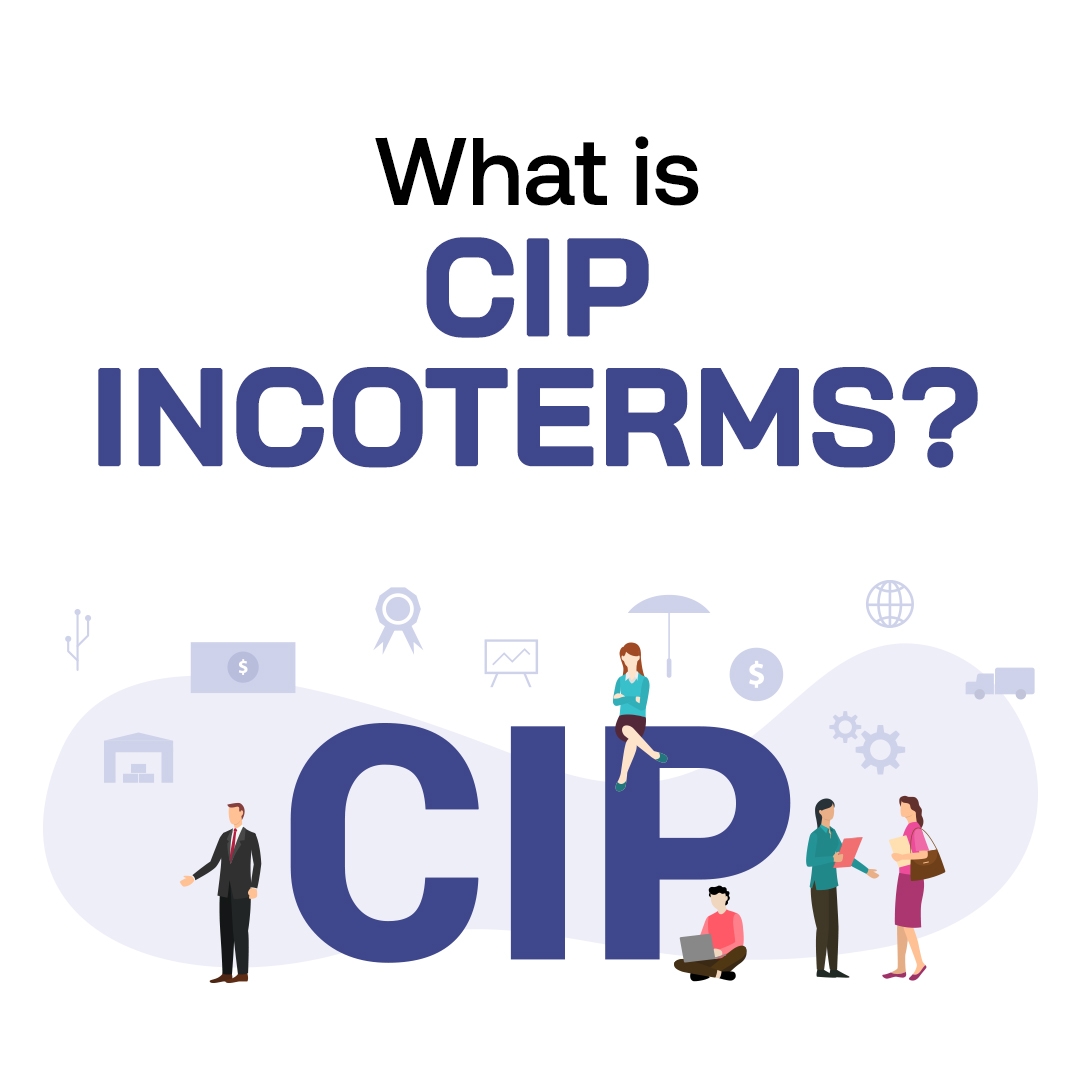
In global trade, CIP Incoterms play a vital role in determining the responsibilities and costs shared between sellers and buyers. CIP stands for Carriage and Insurance Paid To, and it is one of the official Incoterms published by the International Chamber of Commerce (ICC). The CIP Incoterms definition outlines that the seller delivers the goods to a carrier, pays for transport and also provides insurance for the buyer’s benefit until the goods arrive at the named destination. Understanding the Incoterms CIP meaning is essential for companies engaging in international trade, as it clarifies financial obligations, shipping responsibilities and risk management.
1. Advantages and Disadvantages of CIP Incoterms
Like all Incoterms, CIP terms Incoterms
offer both benefits and challenges.
Advantages:
- The seller assumes significant
responsibility, making transactions simpler for the buyer.
- Insurance is included, which reduces the
buyer’s financial risk.
- It is widely recognized and accepted in
international contracts.
Disadvantages:
- Buyers may feel they have less control over
the choice of carrier and insurance policy.
- Insurance may only cover the minimum level
required, which may not be sufficient for high-value goods.
- Costs for the seller can be higher compared
to other Incoterms.
When analyzing the CIP Incoterms meaning in
shipping, companies must balance convenience against cost and control.
2. Seller and Buyer Responsibilities under CIP
The responsibilities under CIP Incoterms
explained are clearly divided.
Seller’s Responsibilities:
- Deliver goods to the agreed place.
- Pay for carriage to the destination.
- Provide insurance coverage meeting at least
ICC (A) standards.
- Handle export clearance and documentation.
Buyer’s Responsibilities:
- Handle import clearance, customs duties and
local taxes.
- Assume risks once goods are delivered to the
carrier.
- Unload goods upon arrival at the destination.
This structure ensures that both parties know
their duties, minimizing disputes in international transactions.
3. CIP Incoterms 2025: Key Updates
The International Chamber of Commerce
periodically revises Incoterms to reflect modern trade practices. The CIP
Incoterms 2025 updates may include refined insurance requirements, digital
documentation enhancements and clarification of delivery obligations in
multimodal transport.
Businesses must stay updated because the CIP
Incoterms definition can change with each revision, potentially impacting
cost structures and liability. For instance, stricter insurance coverage
requirements may raise seller costs but enhance buyer protection.
4. CIP Incoterms vs CIF: What’s the Difference?
One common question in trade is the comparison
of Incoterms CIF vs CIP.
CIF (Cost, Insurance and Freight): Primarily used for sea and inland
waterway transport. The seller covers costs, insurance and freight to the
destination port.
CIP (Carriage and Insurance Paid To): Can be used for any mode of
transport, including multimodal. Insurance provided under CIP must be
comprehensive (ICC A coverage).
Thus, while both involve insurance, CIP
Incoterms explained show broader applicability in global logistics compared to
CIF.
5. When to Use CIP in International Trade?
CIP Incoterms are most suitable in situations
where the buyer prefers the seller to take responsibility for arranging
transportation and providing insurance until the goods reach the named place of
destination. This Incoterm is especially advantageous for shipments that
involve multiple transport modes such as road, rail, air and sea, making it
highly flexible for complex logistics chains. It is also commonly chosen when
buyers seek reduced exposure to risks during transit, as the seller is required
to provide comprehensive insurance coverage. By understanding the CIP
Incoterms meaning in shipping, businesses can apply CIP effectively in
transactions where reliability, cost predictability, and risk mitigation are
critical.
6. TradeAtlas and CIP Incoterms: Data-Driven Trade Decisions
For exporters and importers, platforms like
TradeAtlas provide valuable insights. By analyzing global import and export
records, traders can understand how often CIP Incoterms are used across
industries and regions. This helps identify trustworthy buyers, competitive
exporters and pricing benchmarks.
Whether you are trying to understand CIP
Incoterms explained in practice or compare them with other Incoterms,
TradeAtlas offers access to billions of real transaction records. With
TradeAtlas, companies can minimize risks and maximize opportunities in
international trade.
7. CIP FAQ
The CIP Incoterms FAQ section provides quick
and clear answers to the most frequently asked questions by exporters and
importers. By reviewing these explanations, businesses can better understand
the CIP Incoterms meaning in shipping, avoid misunderstandings in international
contracts, and make informed decisions about when and how to apply CIP in real
trade scenarios.
7.1. What does CIP mean?
CIP stands for Carriage and Insurance Paid To.
According to the CIP Incoterms definition, the seller delivers the goods to the
carrier and pays for transport and insurance until the named destination. This
gives the buyer added protection, as the seller must provide comprehensive
insurance, reducing financial risk and ensuring smoother international
transactions.
7.2. What is the term CIP?
CIP, or Carriage and Insurance Paid To, means
the seller arranges transport and provides insurance until the goods reach the
agreed destination. The Incoterms CIP meaning makes it versatile for all
transport modes and ensures buyers gain extra security, while still being
responsible for import duties and customs clearance.
7.3. What is CIP used for?
CIP is used in contracts where the buyer wants
the seller to cover both transport and insurance, particularly in multimodal
shipping scenarios. It is popular because the CIP Incoterms explained ensure
reduced risk for buyers.
7.4. Who pays duty on CIP Incoterms?
Under CIP terms, the buyer is responsible for
paying duties, taxes and customs clearance fees at the destination. The seller
only covers transport and insurance until the named place.
In summary, CIP Incoterms are a powerful tool
in global trade, ensuring clear allocation of transport and insurance
responsibilities. The CIP Incoterms meaning in shipping emphasizes buyer
protection while assigning greater duties to the seller. Businesses must
evaluate the advantages and disadvantages of CIP Incoterms, compare them with
alternatives like CIF and stay updated with revisions such as CIP Incoterms
2025.
By combining practical knowledge with
TradeAtlas’ comprehensive trade data, companies can navigate international
trade confidently, making informed decisions about when and how to use CIP
Incoterms.
For detailed information on the subject of how to find a manufacturer, you can review our content “How To Find a Manufacturer for a
Product?”.