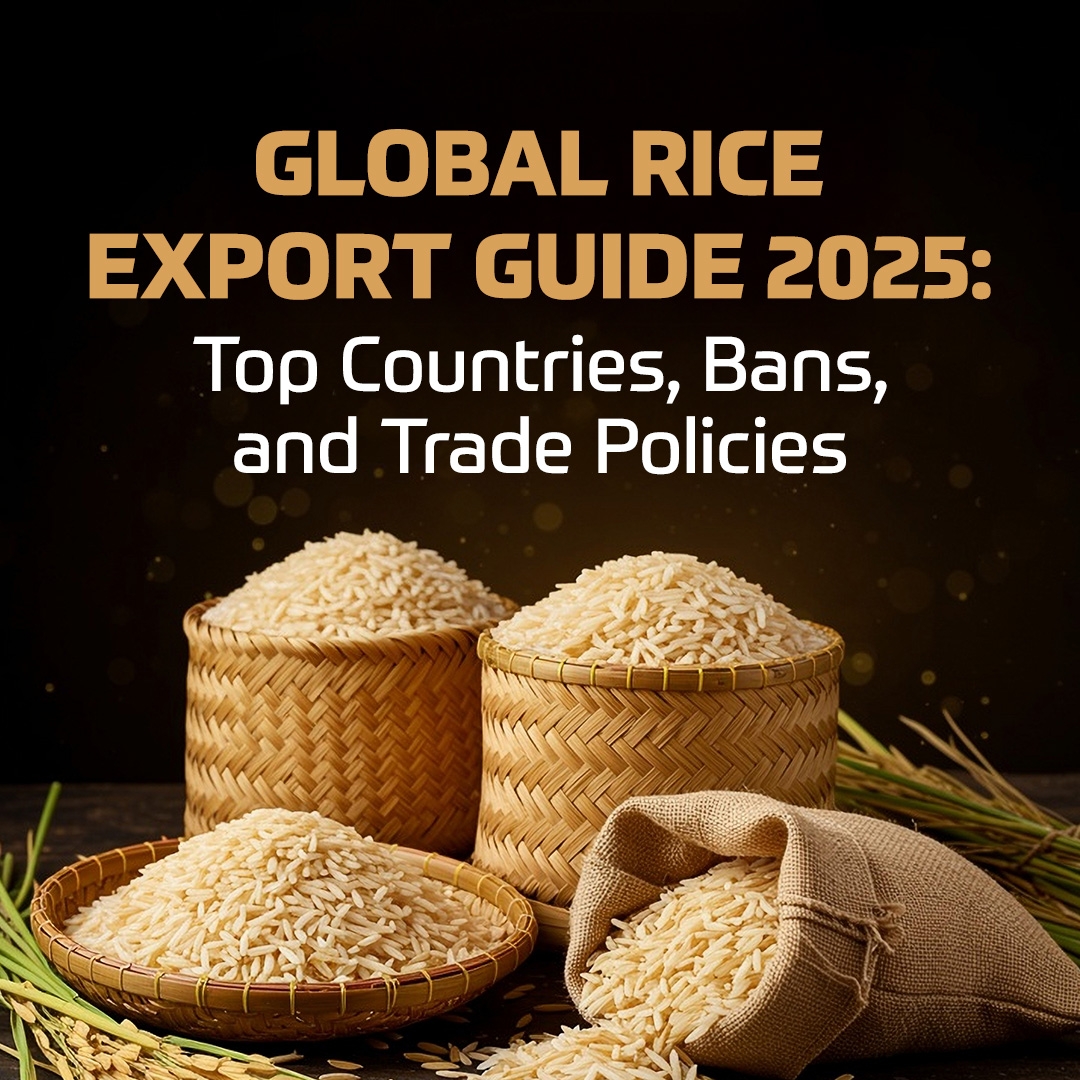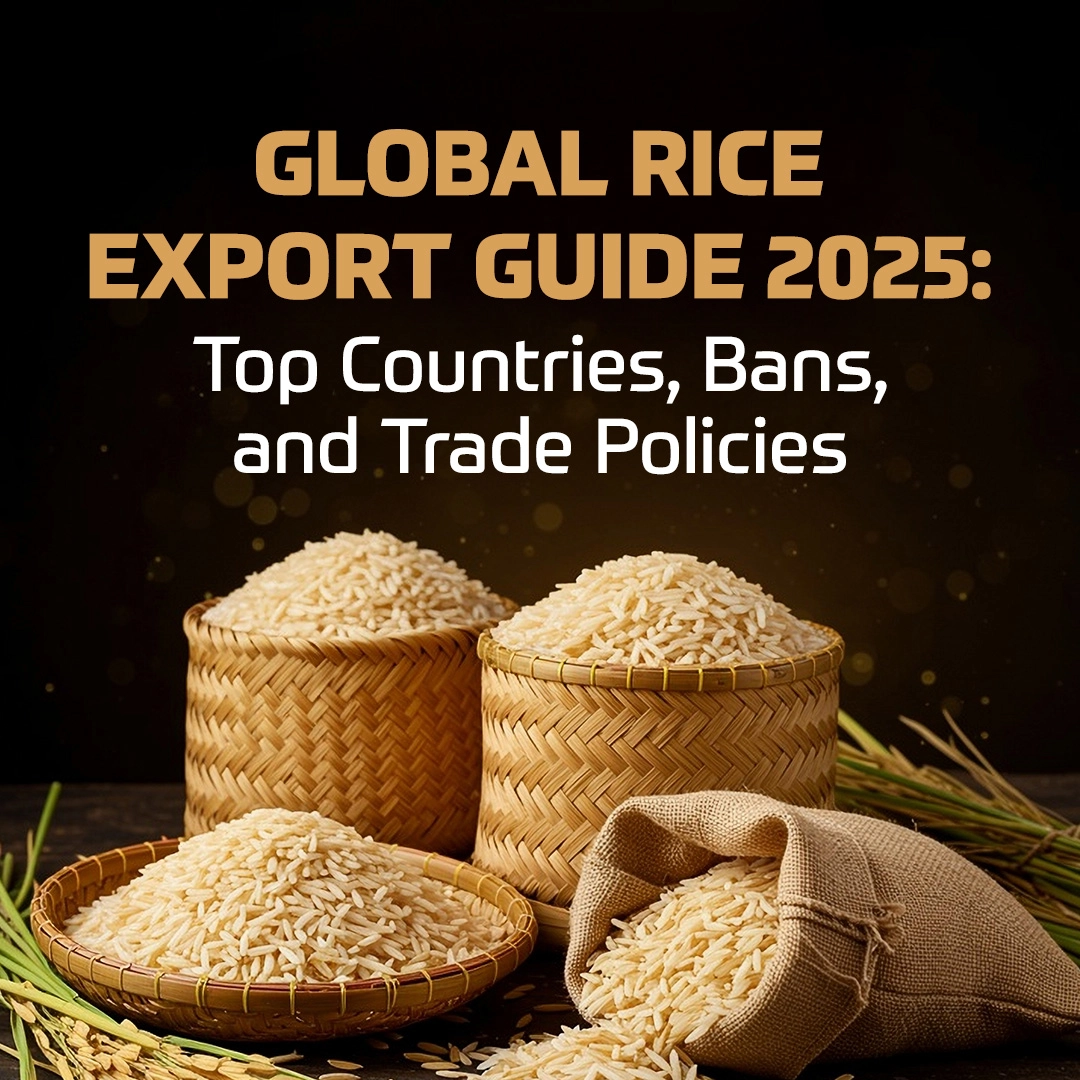
Global rice trade remains one of the most vital components of international food commerce in 2025. As the global population continues to rise and consumption patterns evolve, understanding the dynamics of rice exports has become crucial for both governments and businesses. This Global Rice Export Guide 2025 explores the world’s leading rice export countries, recent export bans and major trade policies shaping the global rice market. From India’s policy changes to Japan’s premium rice exports and Pakistan’s basmati trade, this guide provides a comprehensive view of the opportunities and challenges in the modern rice export landscape.
1. Overview of Rice Export Market
Rice is one of the most essential food crops in
the world, feeding more than half of the global population. As a staple food,
the rice trade plays a critical role in global food security and agricultural
economies. The rice export market has seen significant shifts in recent years
due to changing climate conditions, export restrictions and global demand
fluctuations.
In 2025, the global rice export industry
continues to be dominated by Asia, particularly South and Southeast Asia. These
regions not only have the ideal climate for cultivation but also a long history
of export-oriented agriculture. The world’s top rice export countries include
India, Thailand, Vietnam, Pakistan and the United States.
2. How to Start a Rice Export Business?
Starting a rice export business requires
understanding both local agricultural regulations and international trade
standards. Entrepreneurs need to secure an export license, register their
company and identify reliable suppliers and buyers.
The essential steps include:
- Selecting a specific type of rice, such as
basmati, jasmine, parboiled or non-basmati.
- Ensuring compliance with the importing
country’s food safety and packaging regulations.
- Partnering with certified mills and quality
testing laboratories.
- Using trade databases like TradeAtlas to find
verified international rice buyers and importers.
The success of a rice export venture depends on
maintaining quality standards, optimizing logistics and leveraging trade data
to identify profitable markets.
3. Which Country Exports the Most Rice?
As of 2025, India continues to be the highest
rice export country and the largest rice export country in the
world, accounting for more than 35% of global rice shipments. India’s dominance
in the rice trade is supported by its vast agricultural land, low production
costs and strong government incentives for exporters.
Following India, Thailand, Vietnam and Pakistan
are also leading exporters. These countries benefit from favorable weather
conditions and advanced milling facilities that enhance rice quality and export
value.
4. Global Rice Export Trends
The rice export in world is influenced
by global demand trends, population growth and climate-related production
issues. Several major trends are shaping the rice market in 2025:
- Shift toward parboiled and high-value rice
varieties: Consumers in Africa and the Middle East are demanding parboiled
and premium rice types.
- Government export restrictions:
Countries such as India and Myanmar have implemented export bans or duties to
control domestic prices.
- Digital trade platforms: Exporters now
use digital databases like TradeAtlas to identify rice export companies
and target new international markets.
- Sustainability focus: Exporters are
adopting eco-friendly cultivation and packaging practices to meet international
standards.
5. Top Rice Exporting Countries
Rice exports are concentrated in a few key
countries that dominate global trade. The top rice export country list
for 2025 is as follows:
1. India
2. Thailand
3. Vietnam
4. Pakistan
5. United States
6. China
7. Myanmar
8. Cambodia
9. Brazil
10. Uruguay
5.1. Largest Rice Exporter in the World
India is the world largest rice export
country, contributing over 18 million metric tons in 2024–2025. Its
diversified rice varieties, such as basmati and non-basmati, make it a key
supplier to Africa, the Middle East and Southeast Asia.
6. Rice Export by Country
The global rice export in the world is mainly
driven by Asian countries, which dominate both production and trade. Each
exporting nation has unique characteristics that influence its competitiveness,
from India’s vast cultivation capacity to Japan’s focus on premium rice
varieties and Pakistan’s strong basmati reputation. Understanding
country-specific export strategies helps traders and investors identify the
most profitable opportunities in the rice export business.
6.1. India Rice Export Overview
India’s rice exports are the backbone of the
global rice trade. The country ships both basmati and non-basmati rice to over
150 nations. The major destinations include Iran, Saudi Arabia, Bangladesh,
Benin and the UAE.
6.1.1. India Rice Export Policy Change
In recent years, the Indian government has
adjusted export policies to balance domestic food inflation and global demand.
Export duties and restrictions on certain categories, like parboiled rice
export, were introduced in 2023, continuing into 2025 to maintain local food
security.
6.1.2. Is Rice Export Banned in India?
While India has not implemented a full export
ban on all rice types, specific bans have targeted non-basmati white rice
exports. However, basmati rice and parboiled rice export continue with
certain restrictions or duties. These measures are temporary and subject to
change based on domestic supply and international prices.
6.1.3. How to Export Rice from India
To start exporting rice from India, companies
must:
- Obtain a registration certificate from the
Directorate General of Foreign Trade (DGFT)
- Register with the Agricultural and Processed
Food Products Export Development Authority (APEDA)
- Partner with local milling units for quality
control
Use export intelligence tools such as
TradeAtlas to locate verified rice importers and rice export listed
companies in India.
6.2. Japan Rice Export Overview
Japan has traditionally been a rice-importing
nation, but in recent years, it has expanded its exports due to premium
short-grain rice varieties. Japanese rice, such as Koshihikari, has found niche
markets in the U.S., Hong Kong and Singapore. The Japanese government actively
promotes rice export in world markets through branding and quality
certifications.
6.3. Pakistan Rice Export Overview
Pakistan is one of the major rice export
countries, especially known for its high-quality basmati rice. The country’s
main export markets include Kenya, China and the Middle East. Many rice
export companies in Pakistan are family-owned businesses that have expanded
globally by focusing on brand reputation and consistent quality.
7. Basmati & Non-Basmati Rice Exports
The global rice trade is mainly divided into
basmati and non-basmati rice exports. While basmati rice dominates premium
markets for its aroma and quality, non-basmati rice serves as a staple food in
many developing regions. Together, they form the backbone of the international
rice export business.
7.1. Non-Basmati Rice Export Ban
Non-basmati rice is a crucial part of global
consumption, but its exports are often restricted due to domestic shortages. In
India, the non-basmati rice export ban aims to stabilize domestic prices and
ensure availability for local consumers. These restrictions have significantly
impacted the supply chains in Africa and Southeast Asia, where Indian
non-basmati rice dominates.
7.2. Parboiled Rice Export Duty
The parboiled rice export market has also been
affected by India’s 20% export duty. This policy, introduced to maintain
domestic food security, temporarily reduced the competitiveness of Indian
exporters. However, other nations like Thailand and Vietnam have taken
advantage of this gap, increasing their share in the rice export in world
markets.
8. Rice Export Business & Companies
The global rice trade involves thousands of
rice export companies, ranging from small-scale family businesses to
multinational corporations. Major players are concentrated in India, Pakistan
and Thailand. These companies focus on supply chain efficiency, branding and
compliance with import regulations to maintain their position in international
markets.
Some of the leading exporters include:
- KRBL Limited (India)
- LT Foods (India)
- Matco Foods (Pakistan)
- Capital Rice Co. Ltd (Thailand)
- Veetee Rice Ltd (UK-based)
These rice export-listed companies in India and
abroad rely heavily on trade analytics platforms like TradeAtlas to identify
new market opportunities and global buyer trends.
9. Find Verified Rice Export Buyers and Sellers on TradeAtlas
If you are planning to start or expand your
rice export business, data-driven tools are essential. On the TradeAtlas
platform, you can explore thousands of verified rice export companies from
India, Pakistan, Thailand, and other major rice producers.
TradeAtlas allows users to:
- Search by HS code or product name (e.g.,
Basmati rice, Parboiled rice)
- Access company contact details and shipment
history
- Track competitors and identify high-demand
countries
Whether you’re researching rice export
companies in Pakistan or looking for rice export listed companies in India,
TradeAtlas provides the world’s most comprehensive trade intelligence platform
for import
export companies.