Portugal is one of Europe’s most strategically located maritime nations. Sitting at the edge of the Atlantic and acting as a gateway between Europe, Africa and the Americas, the country plays a key role in global shipping routes. For exporters, importers, freight forwarders and logistics professionals, understanding the major ports in Portugal is not just useful, it’s essential for building smarter supply chain strategies.
Portugal’s port system is modern, highly
specialized and connected to both deep-sea container networks and short-sea
European shipping lanes. From large-scale transshipment hubs to regional
breakbulk terminals, the country’s top ports support industries ranging from
automotive and energy to food, chemicals and project cargo.
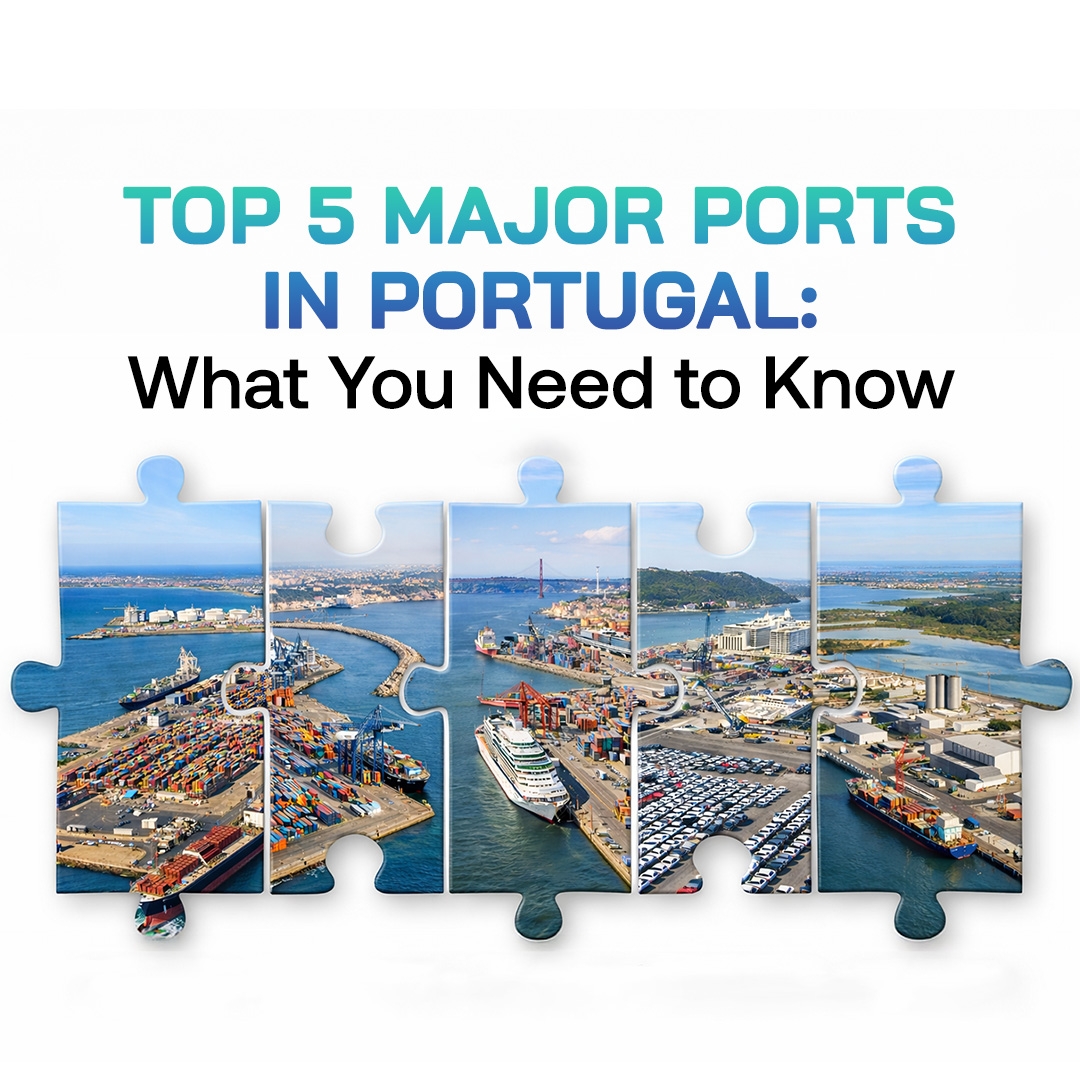
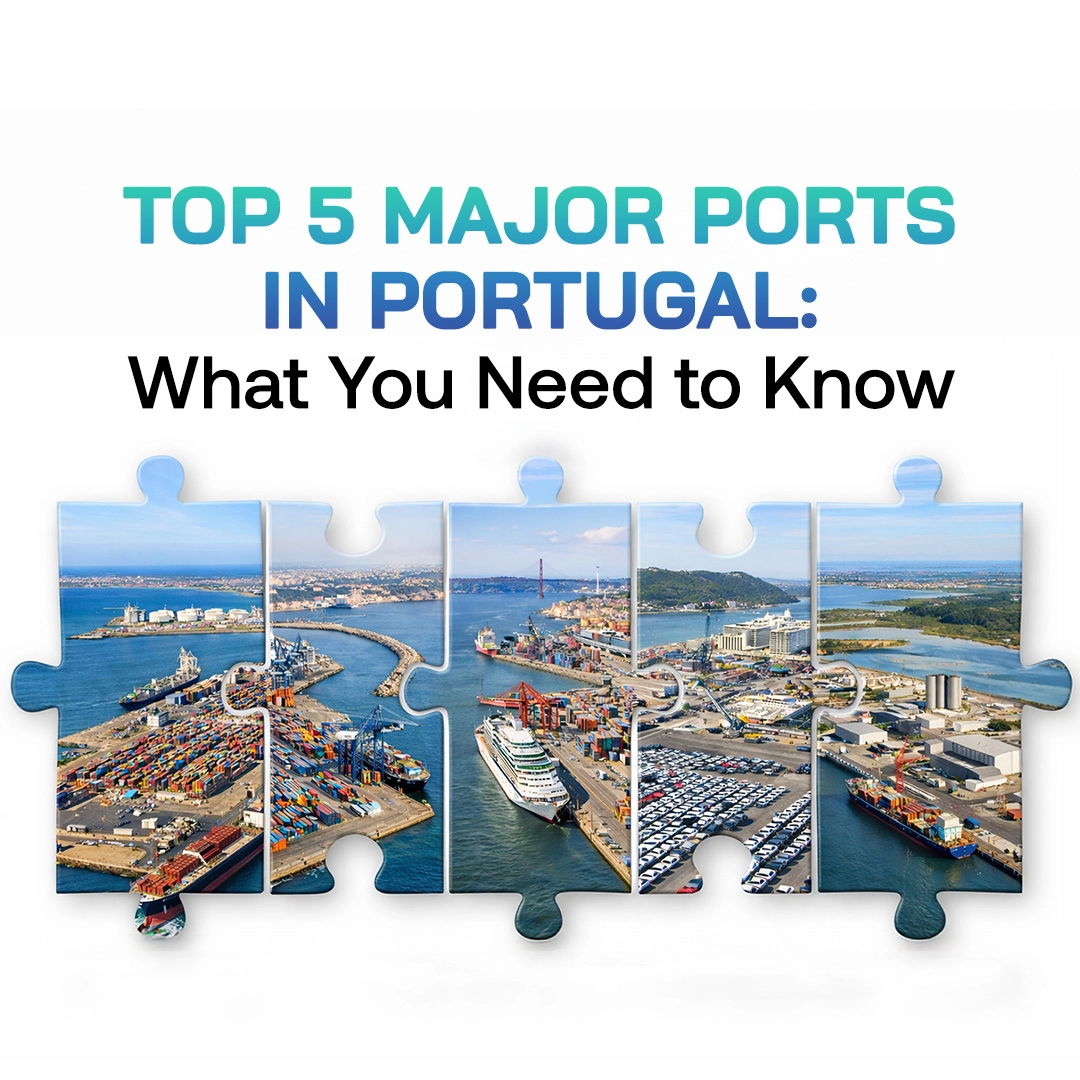
In this guide, we’ll explore Portugal’s five
major ports and explain what makes each one important in international trade.
1. Port of Sines (Porto de Sines)
The Port of Sines is widely recognized as
Portugal’s most internationally focused port and one of the most important
deep-water ports on the Atlantic coast of Europe. Located in southern Portugal,
it is designed for large-scale global shipping operations, especially for
containerized cargo and energy products.
1.1. Role as a Deep-Sea Hub
Sines is Portugal’s only major port with
deep-water capacity specifically built to handle the largest container vessels
and tankers. This deep-sea advantage makes it a natural hub for global carriers
that operate long-distance routes across the Atlantic.
One of the most important features of Sines is
that it functions as both a national gateway and a transshipment port. That
means cargo can be imported for the Portuguese market, exported from Portugal
or redistributed to other European destinations. For companies that depend on
efficient long-haul ocean freight, Sines is one of the strongest options among
all ports in Portugal.
1.2. Connection to Global Container Routes
Sines is strongly integrated into international
container networks. Major shipping alliances and carriers use it as a stop on
routes connecting Northern Europe, the Mediterranean, West Africa and the
Americas. This makes it a valuable port for businesses trading with Brazil, the
United States, Canada and key African markets.
In addition, Sines benefits from logistics
zones and industrial development nearby. This supports long-term growth in
manufacturing, storage and value-added services such as packaging, labeling and
distribution.
2. Port of Lisbon (Porto de Lisboa)
The Port of Lisbon is Portugal’s capital port
and one of the most historically significant maritime centers in Europe. While
it is not as deep-sea focused as Sines, Lisbon remains essential for regional
trade, consumer imports and domestic distribution.
2.1. Location and Strategic Importance
Lisbon sits on the Tagus River and provides
direct access to Portugal’s largest metropolitan market. This location gives
the port a major advantage for imports that are intended for domestic
consumption, including retail goods, food products and industrial supplies.
For companies selling into Portugal, Lisbon
often becomes the most convenient entry point due to its proximity to business
districts, warehouses and national distribution routes. Among the most active
ports in Portugal, Lisbon is also known for balancing cargo operations with
passenger and cruise traffic, reflecting its role as both a trade port and a
tourism hub.
2.2. Main Cargo Types and Container Traffic
Lisbon handles a wide range of cargo types,
including containers, general cargo, bulk shipments and roll-on/roll-off cargo.
The port is particularly important for goods that need fast delivery into
central Portugal.
Container operations are a key part of Lisbon’s
activity, but the port also supports intermodal logistics through road and rail
connectivity. Many importers rely on Lisbon for consumer products, electronics,
packaged foods and other high-frequency trade categories.
3. Port of Leixões (Porto de Leixões)
The Port of
Leixões is located near Porto, Portugal’s second-largest city and one of its
strongest industrial and commercial regions. It is a critical port for northern
Portugal, supporting both domestic supply chains and international exports.
3.1. Industrial and Container Handling Capabilities
Leixões is highly capable in container handling
and industrial cargo operations. It supports a strong mix of container traffic,
breakbulk cargo and bulk shipments. For businesses that export from northern
Portugal, Leixões is often the most efficient choice.
The port is closely tied to regional industries
such as textiles, footwear, machinery, automotive parts, chemicals and food
processing. As a result, it plays a major role in Portugal’s export
competitiveness and stands out as one of the most commercially active ports in
Portugal.
3.2. Hinterland and Logistics Network
One of Leixões’ strongest advantages is its
hinterland connection. Northern Portugal is a manufacturing-heavy region, and
the port benefits from road and rail links that connect factories, warehouses
and logistics centers to the port terminals.
This logistics strength reduces inland
transportation costs and improves lead times. For exporters, this can translate
into faster shipping schedules, lower operational risk, and improved
reliability, especially in competitive European markets.
4. Port of Setúbal (Porto de Setúbal)
The Port of Setúbal is located south of Lisbon
and is widely known for its specialization in Ro-Ro traffic and bulk cargo. It
has a strong industrial profile and plays a major role in automotive exports
and industrial shipping.
4.1. Specialization in Ro-Ro and Bulk Cargo
Setúbal is particularly important for
roll-on/roll-off cargo, where vehicles and wheeled equipment are driven
directly onto ships. This makes it one of the most valuable ports for
automotive logistics and industrial exports.
In addition, Setúbal handles bulk cargo such as
agricultural products, minerals, cement and industrial raw materials. Its cargo
mix makes it different from the container-heavy operations of Sines or Leixões,
showing how diverse the major ports in Portugal truly are.
4.2. Automotive and Industrial Exports
Setúbal is closely linked to Portugal’s
automotive and manufacturing supply chain. Vehicle exports, automotive parts
and industrial equipment frequently move through this port, supporting both
European and overseas trade.
For global importers sourcing vehicles or
industrial products from Portugal, Setúbal often becomes the key export
gateway. Its Ro-Ro expertise and industrial capacity make it especially
attractive for large-scale exporters.
5. Port of Aveiro (Porto de Aveiro)
The Port of Aveiro is one of Portugal’s most
important regional ports. It may not be as large as Lisbon or Sines, but it
plays a vital role in specialized cargo handling and regional trade
development.
5.1. Regional Trade and Short-Sea Shipping
Aveiro has a strong position in short-sea
shipping, which connects Portugal to other European ports through coastal and
regional maritime routes. This type of trade is increasingly important as
European supply chains look for alternatives to congested road networks and
rising trucking costs.
For companies trading within Europe, Aveiro
offers an efficient maritime solution, supporting sustainable logistics
strategies. It also contributes to the competitiveness of smaller exporters who
rely on cost-effective shipping options through ports in Portugal.
5.2. Breakbulk and Project Cargo Operations
Aveiro is known for handling breakbulk and
project cargo. These are shipments that cannot be containerized easily, such as
oversized machinery, wind turbine components, steel structures and industrial
construction materials.
Project cargo requires specialized equipment,
planning and operational expertise. Aveiro’s capabilities in this area make it
an important port for energy, infrastructure and industrial development
projects.
6. How These Ports Support Global Supply Chains
Portugal’s top ports play complementary roles
in global trade. Instead of competing for the same cargo types, each port has
developed strengths that support different supply chain needs.
Sines functions as a deep-sea gateway and
transshipment hub, connecting Portugal to global container routes and energy
trade. Lisbon supports the capital region and domestic distribution, making it
essential for consumer imports and general cargo. Leixões drives trade for
northern Portugal’s industrial base and exports. Setúbal strengthens Portugal’s
automotive and bulk cargo operations, while Aveiro provides regional
flexibility and specialized project cargo services.
Together, these ports in Portugal improve
supply chain resilience. Businesses can choose the most suitable port depending
on cargo type, shipping lane, inland delivery location and industry
requirements. This flexibility becomes even more valuable during periods of
global disruption, such as container shortages, port congestion or geopolitical
uncertainty.
For international traders, Portugal also offers
strategic advantages beyond port infrastructure. Its Atlantic coastline
provides direct access to transatlantic routes, while its membership in the
European Union makes it an efficient entry point into the EU single market.
Many companies use Portuguese ports as a bridge between global suppliers and
European consumers.
7. TradeAtlas Insight: Tracking Cargo Flows Through Portugal’s Major Ports
Understanding port capabilities is only one
part of building a successful trade strategy. The bigger challenge is knowing
who is shipping what, where cargo is moving and how trade flows are changing
over time.
This is where TradeAtlas becomes a valuable
tool for importers, exporters and logistics professionals. With TradeAtlas, you
can analyze trade activity across key ports in Portugal, identify leading
exporters and importers, monitor shipping patterns and explore international
market opportunities using real customs and trade data.
If you want to expand into Portugal, source
products from Portuguese suppliers or track competitor shipments, TradeAtlas
helps you turn port-level trade knowledge into actionable business decisions.
To explore product categories moving through
the major ports in Portugal and identify the right classifications for your
shipments, you can also use TradeAtlas as an HS code
directory for
smarter trade decisions.