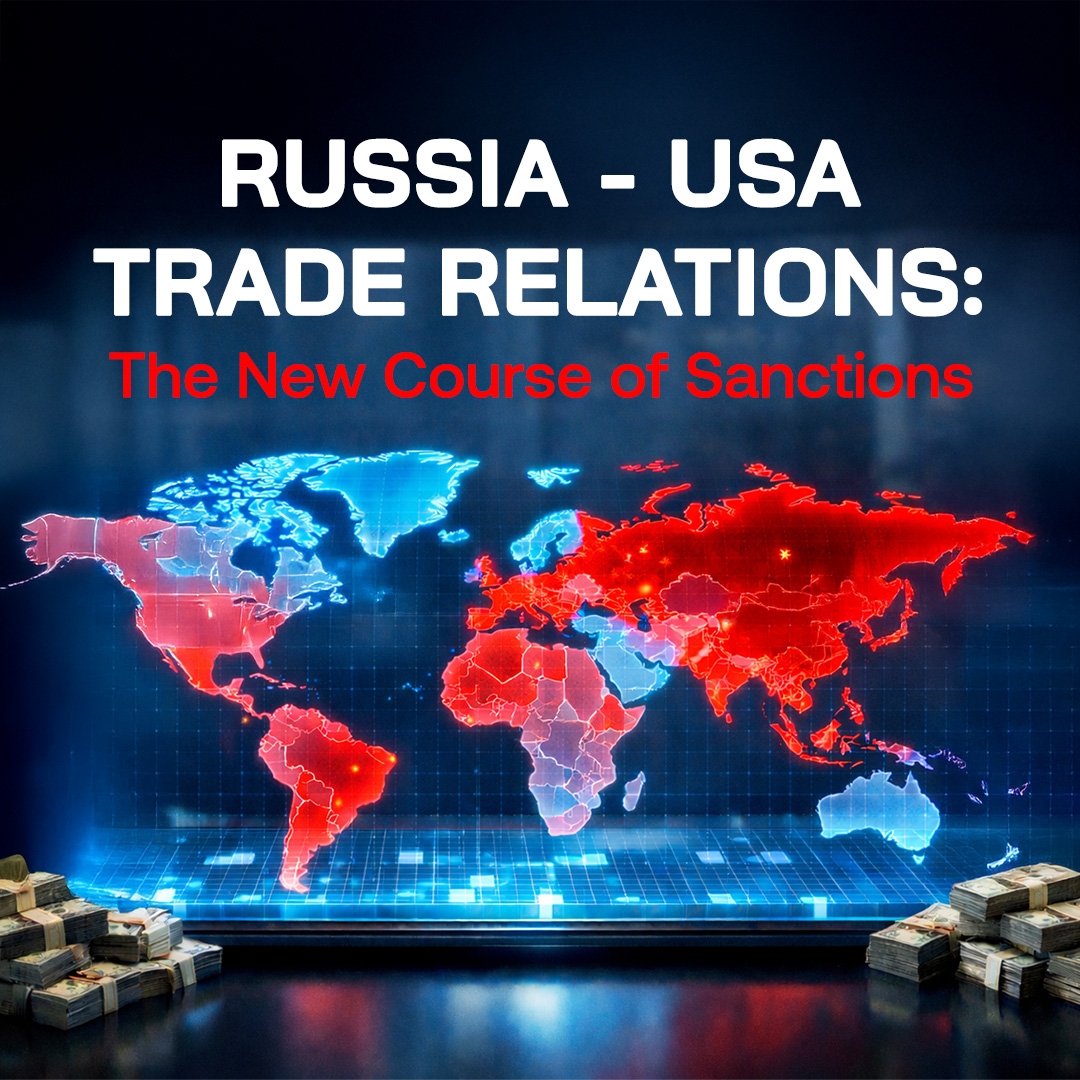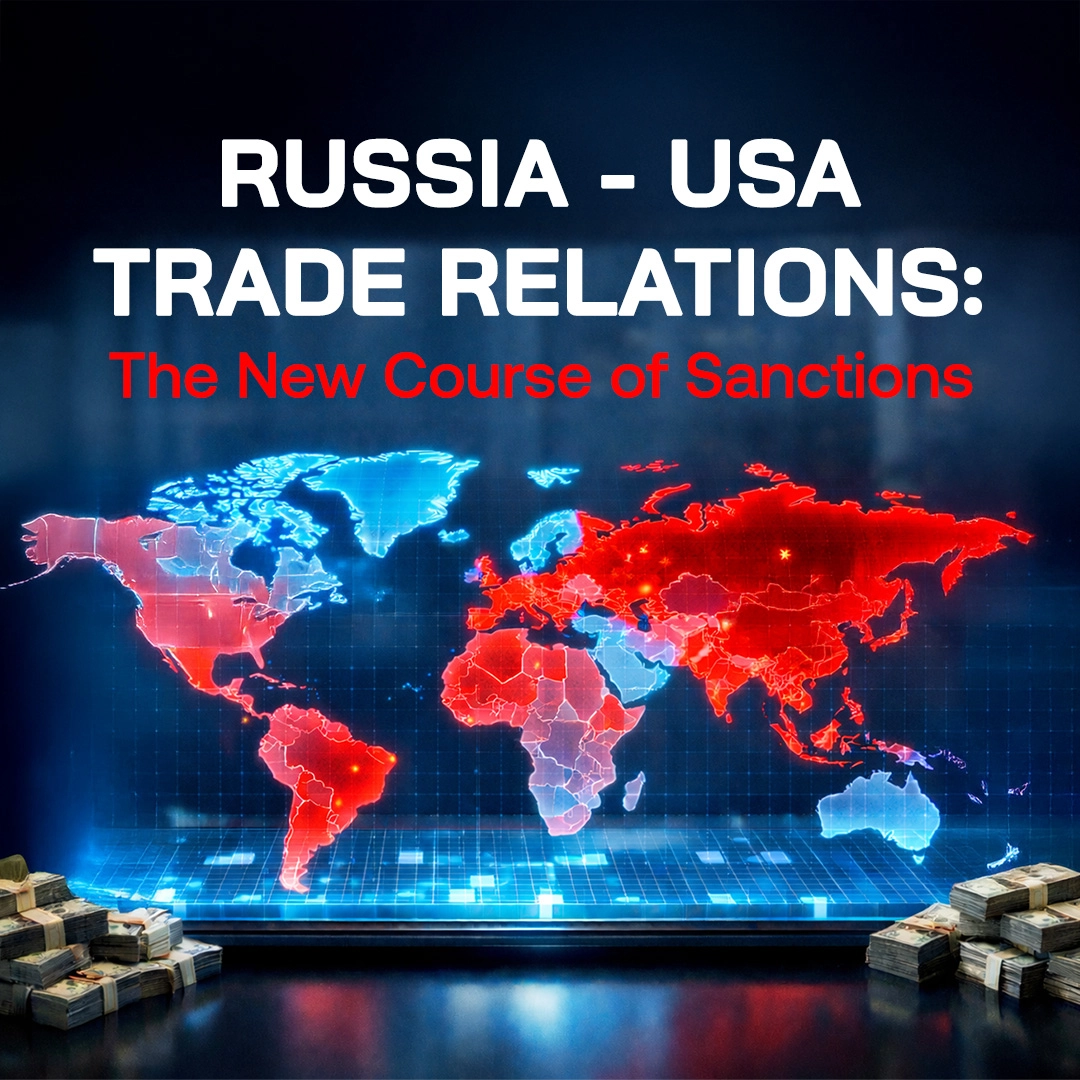
Trade relations between Russia and the United States have always been shaped by geopolitics as much as economics. Yet in the last decade, especially after 2022, the relationship has entered a phase where sanctions are no longer just a temporary policy tool, but a structural framework that redefines how trade, finance, logistics and compliance work across the world. This “new course” of sanctions has created ripple effects far beyond bilateral trade volumes, influencing energy markets, payment systems, global supply chain decisions and even the future of economic blocs.
For companies operating in international trade,
understanding the direction of Russia USA relations is not just a
political issue; it is a strategic necessity. This article explores how
sanctions evolved, why they have changed in nature and what the future may look
like for global trade.
1. Historical Context of Russia-USA Trade Relations
Russia-USA trade relations have always been
shaped by geopolitics rather than pure market forces. Over time, trade expanded
and contracted depending on political tensions, making sanctions a recurring
tool in the bilateral economic relationship.
1.1. Post-Cold War Economic Engagement
After the collapse of the Soviet Union, the
United States and Russia entered a period of cautious economic engagement. The
early 1990s were defined by Russia’s transition toward a market economy and
U.S. support for integration into global institutions. The expectation in
Washington was that trade and investment could help stabilize Russia, encourage
reforms and reduce the risk of renewed confrontation.
During this era, trade relations were not
massive in scale compared to U.S. trade with Europe or China, but they carried
symbolic importance. United States firms explored opportunities in Russia’s
energy, metals, consumer goods and financial sectors. Russia, meanwhile, looked
to the West for technology, investment and access to international markets.
However, even during this “cooperative” period,
the relationship remained vulnerable. Political distrust never disappeared, and
Russia’s economic structure, dominated by hydrocarbons and state-linked
industries, made integration uneven. Still, trade was widely seen as a bridge.
1.2. The Impact of the 2014 Crimea Crisis
The annexation of Crimea in 2014 marked a
turning point. The U.S. and its allies introduced sanctions targeting
individuals, banks, defense firms and energy-related technology exports. This
was the first major wave of modern sanctions that moved beyond symbolic
measures and into sector-level restrictions.
While trade did not collapse overnight, the
sanctions changed the business climate. Financial access became more
complicated, technology transfers were restricted, and Western investors began
reassessing risk. The 2014 crisis also demonstrated a new reality: sanctions
were not only about punishment; they were becoming a long-term strategy to
shape Russia’s economic trajectory.
The 2014 sanctions also pushed Russia to begin
developing alternative systems. Moscow started expanding its domestic payment
infrastructure, exploring trade partnerships beyond the West, and increasing
its focus on non-dollar settlements. These efforts were limited at first, but
they laid the foundation for the post-2022 acceleration.
1.3. Trade Dynamics Before the 2022 Escalation
Before 2022, Russia-U.S. trade existed but was
already constrained. Russia exported mostly raw materials and commodities, such
as oil products, metals, fertilizers and industrial inputs, while importing
machinery, technology and high-value manufactured goods.
However, trade flows were not symmetrical. The
United States was not Russia’s main trading partner and Russia was not a major
U.S. export market compared to others. The relationship mattered more in
strategic sectors: energy pricing, metals supply, nuclear fuel and geopolitical
leverage.
By the early 2020s, the relationship had
already shifted into a semi-adversarial economic posture. Then, 2022
dramatically changed the scale, intensity and purpose of sanctions.
2. What Defines the “New Course” of Sanctions?
Sanctions after 2022 differ from earlier
measures in three major ways.
First, they are broader and deeper. Instead of
targeting specific individuals or companies, the sanctions increasingly target
entire systems: banking access, shipping insurance, technology imports and even
the ability to use global financial infrastructure.
Second, they are designed for endurance. The
“new course” is not built around the assumption that sanctions will be lifted
quickly. Instead, they function as a long-term policy architecture, forcing
businesses to permanently redesign supply chains and financial structures.
Third, the sanctions are increasingly
coordinated. The United States, European Union, United Kingdom and several
allied economies have aligned enforcement, compliance rules and restrictions.
This multiplies the impact because companies cannot simply shift trade routes
without facing secondary risk.
This is why many analysts describe the current
phase not as a temporary trade dispute, but as a structural economic
confrontation, often framed by the public using phrases like Russia vs USA
war, even when the battleground is trade, finance and supply chains rather
than direct bilateral commerce.
3. Energy at the Center of the Conflict
Energy has always been central to Russia’s
economic power. Oil, gas and related exports generate a significant share of
state revenue and foreign exchange earnings. Because of this, energy sanctions
have been among the most strategically important tools used by the U.S. and its
allies.
However, the energy sanctions model has
evolved. Instead of attempting a full immediate shutdown, many Western policies
have focused on limiting revenue while keeping global supply stable. This is
why mechanisms such as price caps, shipping restrictions and insurance
limitations became central.
Russia responded by redirecting energy exports
toward Asia, strengthening partnerships with non-Western buyers and offering
discounts to maintain market share. This shift has changed global energy flows,
creating new trade routes, new tanker logistics and new pricing patterns.
For the United States, the energy conflict has
been a balancing act. Too much restriction could destabilize global oil markets
and raise inflation, while too little pressure could leave Russia’s revenues
intact. This tension is one of the defining features of the current sanctions
era.
4. Financial Decoupling and Currency Implications
Sanctions are not only about goods, but they
are also about the ability to pay, settle and finance trade. Financial
decoupling has arguably been more disruptive than trade restrictions
themselves, because it affects every industry.
When access to global payment networks is
limited, trade becomes slower, more expensive and more uncertain. Banks become
cautious, compliance costs rise and companies often avoid transactions even
when they are technically legal.
This is why the “new course” of sanctions is
best understood as an economic system redesign rather than a simple trade ban.
4.1. Dollar Dependence and De-Dollarization Efforts
The U.S. dollar has long been the backbone of
global trade. It is used not only for U.S.-related transactions, but also for
commodity pricing, trade finance and international reserves. This dominance has
given Washington significant leverage.
Russia’s response has included efforts to
reduce dollar exposure. These include increased use of alternative currencies
in trade settlements, expanded local payment systems and closer financial
cooperation with non-Western partners.
However, de-dollarization is not simple. Even
if settlements happen in other currencies, many global supply chains still rely
on dollar-based finance, dollar-priced commodities and Western-linked shipping
insurance. So, while Russia has reduced some dollar dependence, the process
remains partial and costly.
Still, the push is strategically important. The
long-term implication is that sanctions may accelerate fragmentation in global
currency usage, even if the dollar remains dominant.
4.2. U.S.-EU Sanctions Alignment
One of the strongest features of the post-2022
sanctions regime is the alignment between the U.S. and the European Union.
Historically, Europe has had deeper trade ties with Russia, especially in
energy, making alignment more difficult.
Yet the current era has seen extensive
coordination: shared restrictions on banking, technology exports, transport
services and compliance standards. This has reduced Russia’s ability to exploit
gaps between Western jurisdictions.
For businesses, this alignment has created a
new compliance reality. Companies must now evaluate not only U.S. sanctions,
but also EU and UK rules, because enforcement cooperation increases the risk of
penalties and reputational damage.
4.3. Pressure on Third Countries and Global Compliance
A key feature of modern sanctions is the
pressure placed on third countries and intermediary trade routes. Even when
goods do not move directly between Russia and the United States, sanctions can
still apply through re-export restrictions, dual-use controls and financial
monitoring.
This has created a compliance environment where
global companies must think beyond direct trade. Banks, shipping firms,
insurers and logistics providers are now part of the enforcement architecture.
For many businesses, the safest choice is to
avoid Russia-linked trade entirely, even when certain transactions might be
allowed. This over-compliance effect is one reason sanctions can reshape trade
patterns more than official statistics suggest.
5. Economic Impact on Russia
Russia’s economy has shown resilience in some
areas, but sanctions have still imposed significant long-term costs.
One major impact is technology access.
Restrictions on advanced machinery, electronics and industrial components limit
productivity growth and modernization. Even when Russia finds alternative
suppliers, costs are often higher and quality may be lower.
Another impact is financial isolation. Reduced
access to Western capital markets limits investment options and increases
reliance on domestic funding. This may support short-term stability, but it
constrains long-term growth.
Sanctions have also accelerated structural
shifts. Russia has increased trade with non-Western partners, expanded domestic
production in some sectors, and built alternative payment mechanisms. Yet these
adaptations often come with inefficiencies, higher transaction costs and
reduced competitiveness.
Perhaps the most important long-term cost is
uncertainty. When sanctions are durable and unpredictable, businesses struggle
to plan. This discourages investment and pushes the economy toward defensive
strategies rather than innovation.
6. Economic and Strategic Costs for the United States
Sanctions are not free. Even when they are
strategically justified, they create costs for the sanctioning country.
For the United States, one cost is lost access
to certain commodities and industrial inputs. While the U.S. is less dependent
on Russia than Europe was, disruptions still affect global markets, especially
for fertilizers, metals and energy pricing.
Another cost is inflationary pressure. When
global energy and commodity markets tighten, prices rise. Even if the U.S. does
not import heavily from Russia, it still experiences global price effects.
There is also a strategic cost: sanctions can
push targeted countries to deepen partnerships with U.S. rivals. This is a core
debate in Washington. Some policymakers argue that sanctions weaken Russia and
protect global norms. Others argue they accelerate the formation of alternative
systems that reduce U.S. influence over time.
Finally, sanctions impose compliance burdens on
U.S. firms and financial institutions. Large multinational companies must
invest heavily in legal review, risk management and monitoring, costs that do
not necessarily create economic value but are required for operating safely.
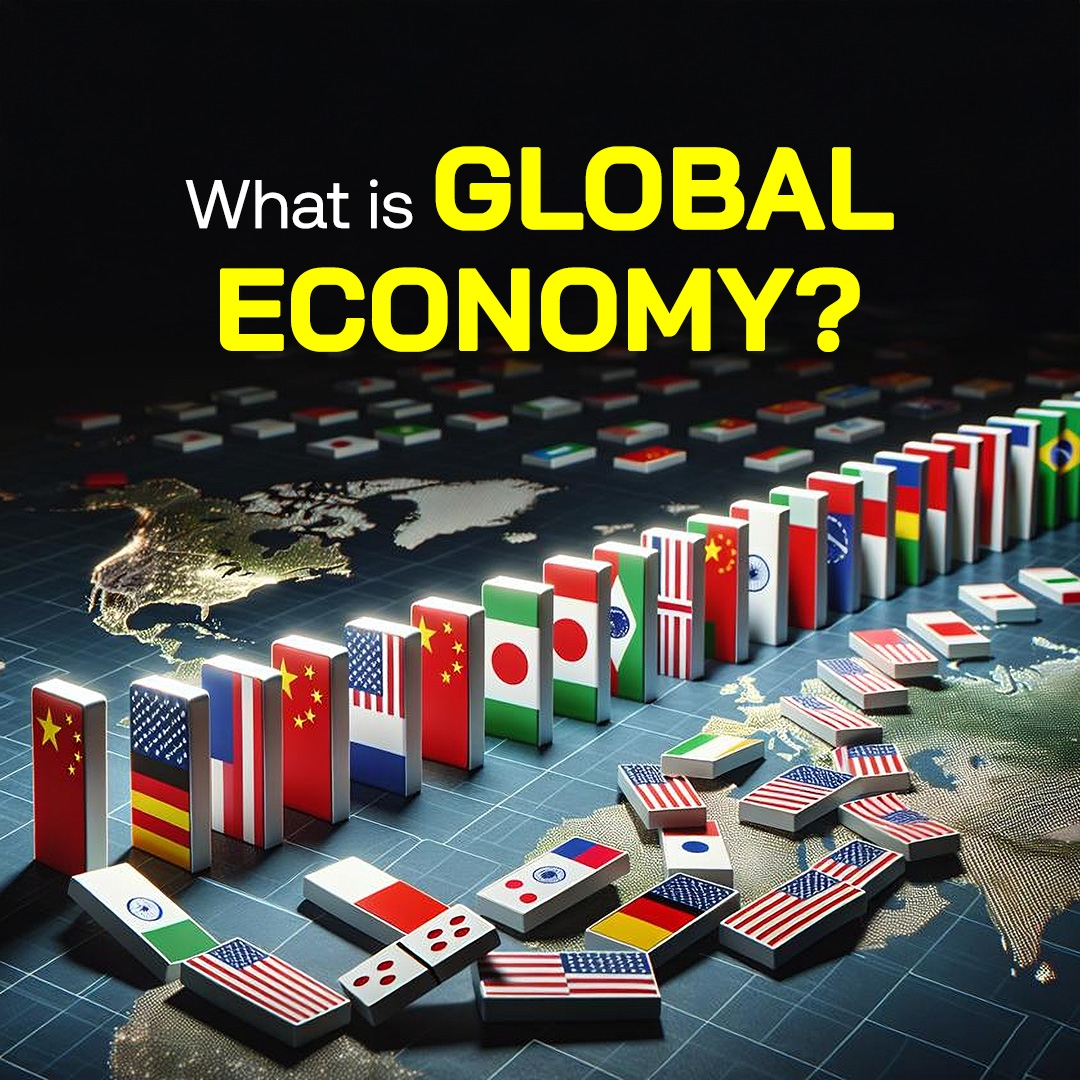
7. Global Trade Fragmentation and the Risk of Bloc Formation
The biggest consequence of the sanctions era
may be global trade fragmentation. Instead of one highly interconnected global
economy, the world could move toward competing trade blocs.
This does not mean full separation, but it does
mean increasing friction. Countries may align trade, finance and technology
standards with their geopolitical partners. Supply chains may become more
regional and companies may be forced to choose between markets.
The concept of Cold War Russia USA
rivalry is often used to describe this trend. But today’s fragmentation is more
complex than the original Cold War. Many countries do not want to fully align
with either side. Instead, they aim to maintain trade flexibility while
avoiding sanctions exposure.
Still, the risk is clear: if sanctions become
the default tool of geopolitical competition, global trade may become less
efficient, more expensive and more politically controlled.
8. Future Scenarios: Escalation, Stabilization, or Structural Decoupling?
The future of Russia-U.S. trade relations
depends on political developments, military realities and global economic
pressures. But several scenarios are plausible.
One scenario is escalation. This could involve
expanded sanctions, stronger enforcement on third-country trade or deeper
restrictions on remaining strategic sectors such as nuclear fuel, rare
materials or advanced shipping services. Escalation would increase global
fragmentation and compliance complexity.
A second scenario is stabilization. In this
case, sanctions remain in place, but enforcement becomes more predictable and
trade patterns settle into a “new normal.” Companies would still avoid direct
exposure, but global markets would adapt with less volatility.
A third scenario is structural decoupling. This
is the most transformative outcome: Russia becomes permanently integrated into
a non-Western economic network, while the West builds supply chains designed to
exclude Russia-linked inputs. This would create parallel systems for finance,
logistics and technology standards.
The reality may be a hybrid. Some sectors may
stabilize while others decouple. But the direction is clear: the era of easy
normalization is over.
9. TradeAtlas Insight: Turning Sanctions Complexity into Trade Strategy
For importers, exporters and logistics
professionals, sanctions are no longer a background issue. They are a core part
of trade planning. The ability to understand trade flows, identify alternative
suppliers, track pricing changes and monitor shifting demand has become
essential.
This is where TradeAtlas provides practical
value. Instead of relying on assumptions, companies can use trade data to
identify:
- Which markets are replacing Russia in key
commodity categories?
- Which supply chains are shifting toward new
regional hubs?
- How pricing and volumes evolve after
sanctions updates?
- Which buyers and suppliers remain active in
high-risk sectors?
In a world where Russia-USA relations influence
global shipping routes, commodity prices and compliance requirements, trade
intelligence becomes a competitive advantage, not just a research tool.
TradeAtlas helps businesses move from
uncertainty to actionable insight by offering structured global import export data, importer-exporter discovery tools
and market trend analysis features that support smarter decision-making in a
fragmented trade environment.