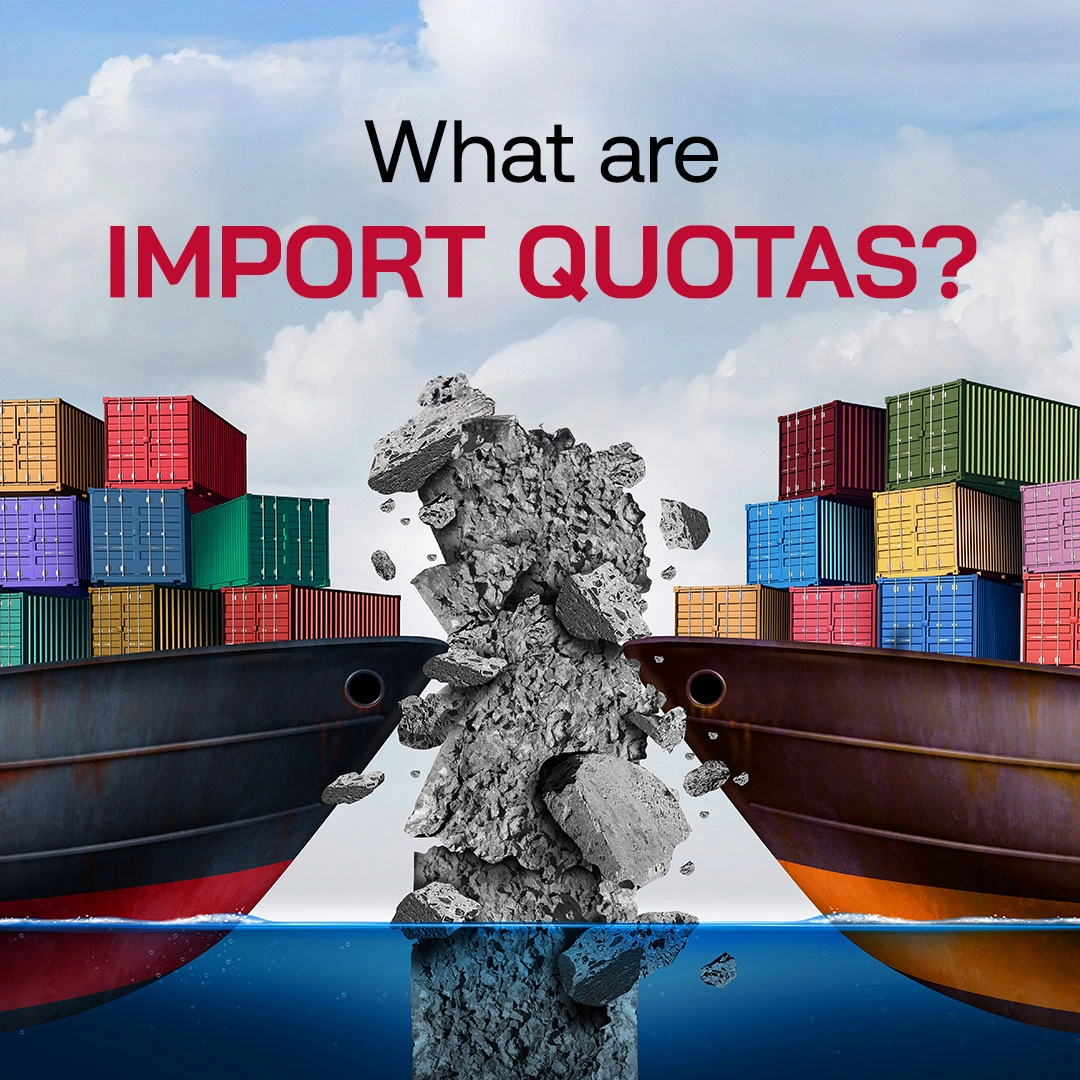
Import quotas are government-imposed limits on the quantity or value of specific goods that can be imported into a country within a defined period. In international trade, import quotas are used as regulatory tools to control the flow of goods across borders, protect domestic industries, and manage supply in sensitive sectors. These restrictions may apply globally or be allocated to specific countries and are commonly used alongside other trade policy instruments such as tariffs and licensing systems.
What is the Purpose of Import Quotas?
The main objective of import quotas is to
regulate the quantity of certain goods entering a country. Governments use
these restrictions to protect domestic industries from foreign competition,
ensure food and resource security and maintain trade balances. By limiting
imports, governments aim to:
- Protect vulnerable domestic industries
- Prevent the dumping of cheap goods
- Safeguard jobs within national borders
(protect employment)
- Maintain national security in critical
sectors
How do Import Quotas Work?
Import quotas set a maximum limit on the amount
or value of a specific good that can be imported into a country over a defined
period, usually annually. Once the quota is reached, additional imports are
either banned or subjected to higher tariffs. There are typically three parties
involved:
1. The government or trade authority
2. Importers who receive quota licenses or
permits
3. Exporters affected by the restrictions
Quotas can be allocated on a first-come,
first-served basis, through auctions or as part of bilateral agreements with
other countries.
What are Types of Import Quotas?
There are several types of import quotas in
international trade, each with different strategic goals:
Global Quotas: A fixed limit on imports from all countries
combined.
Allocated Quotas: Limits assigned to specific countries.
Tariff-Rate Quotas: Allow a certain quantity at a lower tariff;
once exceeded, a higher tariff applies.
Seasonal Quotas: Applied during certain times of the year
(common in agriculture).
Understanding the import quotas meaning
in different contexts is crucial for businesses engaged in cross-border
commerce.
Advantages of Import Quotas
Implementing import quotas can yield several
benefits for a country. One of the primary advantages is domestic industry
protection, as it shields local producers from intense international
competition. This allows homegrown businesses to grow and remain competitive in
the local market. Additionally, import quotas contribute to economic stability
by regulating the volume of foreign goods entering the country, thus preventing
market oversaturation. Another key benefit is job preservation, since limiting
imports helps maintain employment levels within domestic industries. Finally,
quotas support a nation’s strategic autonomy, ensuring that essential goods
such as food, energy and medical supplies are not overly dependent on foreign
sources.
Disadvantages of Import Quotas
Despite their benefits, import quotas also come
with several disadvantages. One major concern is higher consumer prices, as the
restricted supply of goods often leads to increased costs for consumers.
Additionally, quotas can cause market distortions by reducing competition,
which may result in inefficiency and lower product quality. There is also the
risk of retaliatory measures, where affected countries might respond with their
own trade restrictions, potentially escalating into broader trade disputes.
Lastly, import quotas impose administrative burdens, as managing and enforcing
these limitations can be both complex and resource-intensive for governments.
What are Examples of Import Quotas?
Import quotas are used globally across various
sectors. Some notable examples include:
- The United States sugar quota limits imports
to support domestic farmers.
- The European Union maintains quotas on
certain agricultural imports such as bananas or beef.
- Japan has quotas on rice to protect domestic
producers.
- China uses quotas on items like cotton and
fertilizers.
These cases highlight how governments define
import quotas in a way that aligns with national priorities.
Difference Between Tariffs and Import Quotas
Import quotas and tariffs are both trade restriction tools,
but they function differently:
|
Criteria |
Import
Quotas |
Tariffs |
|
Definition |
Physical
limit on quantity |
Financial
tax on imports |
|
Impact
on Price |
Higher
due to restricted supply |
Higher
due to added cost |
|
Revenue
Generation |
No
direct revenue for the government |
Generates
government revenue |
|
Certainty
of Limitation |
Guarantees
quantity control |
No
direct limit on quantity |
|
Flexibility |
Less
flexible, more rigid |
More
adaptable through rate changes |
In short, while both aim to manage imports,
their mechanisms and outcomes differ significantly.
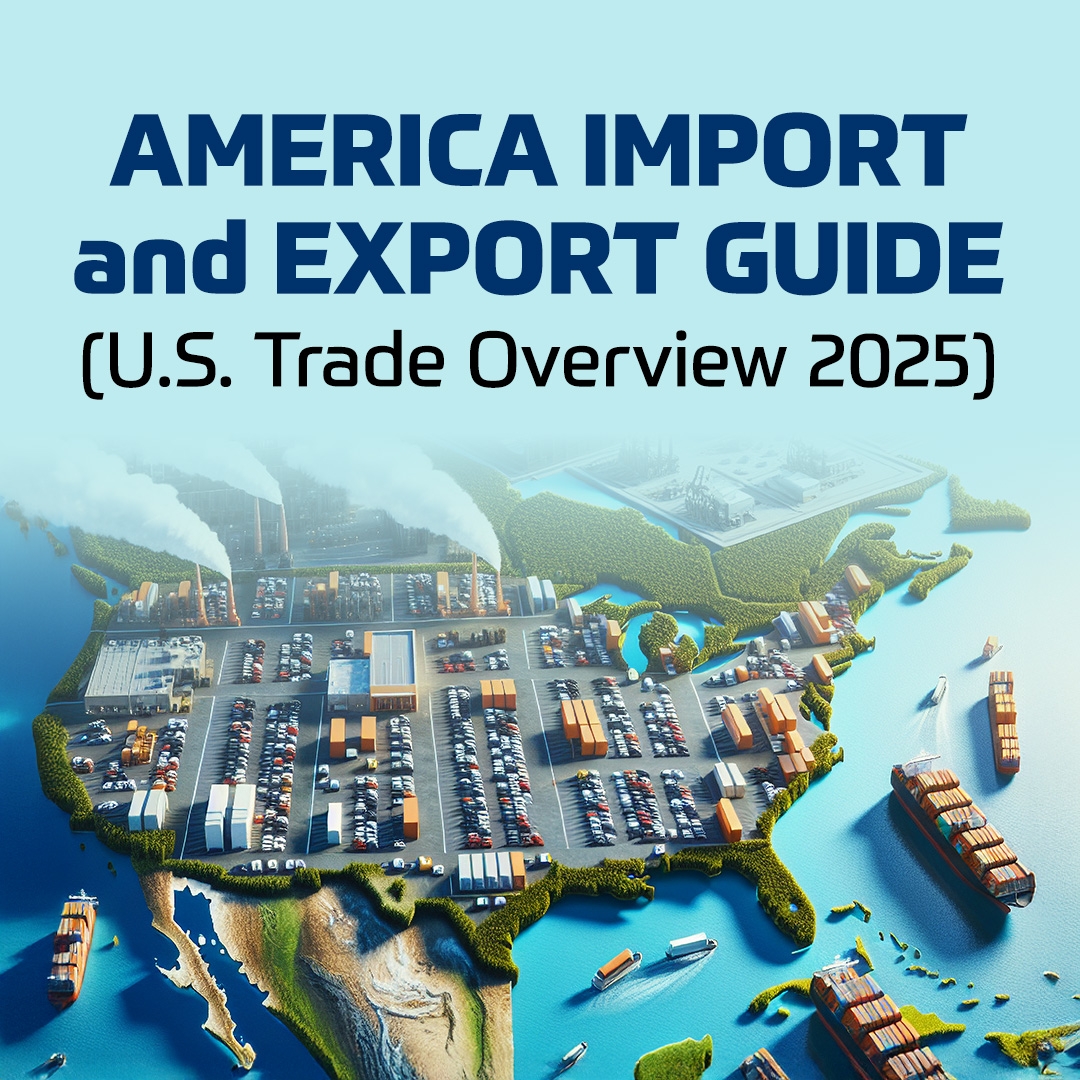
United States Import Quotas
The United States enforces import quotas in
several sectors to protect domestic industries. Administered by agencies like
the U.S. Customs and Border Protection (CBP) and the U.S. Department of
Agriculture (USDA), these quotas cover sugar, dairy products, peanuts and
certain textiles. Import quotas in international trade have long been a
tool in the U.S. trade policy, especially under the WTO framework.
US Import Quotas Examples
A few prominent US import quotas examples
include:
Sugar Quota: Managed by the USDA, the United States limits
sugar imports and allocates country-specific quotas.
Textile Quotas: Though mostly phased out due to WTO rules,
some restrictions still apply in trade with specific nations.
Beef Quota: The United States allows specific quantities
of beef imports from countries like Australia and New Zealand under the TRQ
system.
China Import Quotas
China employs import quotas to regulate
essential resources and encourage domestic industry growth. Examples include:
Cotton: A fixed quota is imposed annually, with most
imports subject to a TRQ system.
Chemical Fertilizers: Imports are restricted to stabilize
domestic markets.
Grains: Quotas on wheat, rice and corn to balance food
security and market prices.
These quotas are often coordinated with
long-term industrial policies and state-owned enterprise strategies.
Import Quotas in India
India also uses import quotas in selective
sectors to protect its economy and ensure supply chain security:
Gold and Silver: Quotas help control current account deficits.
Pulses and Edible Oils: Used to regulate price volatility
and support local farmers.
Steel Products: At times, quotas are imposed on imports to
protect domestic production.
The Indian government adjusts these quotas
dynamically based on domestic production and market conditions.
Import Quotas Canada
Canada implements import quotas primarily under
the supply management system. Key industries include:
Dairy: Strict quotas on milk, cheese and butter
imports.
Poultry and Eggs: Limits in place to stabilize farm income and
supply.
Grain Products: Quotas on certain cereals under trade
agreements.
These are often managed through TRQs in line
with commitments under trade agreements like CUSMA and the WTO.
How TradeAtlas Helps Monitor Import Quotas
TradeAtlas is a powerful platform that enables
traders, manufacturers and policymakers to navigate the complex world of import
quotas. With access to real-time data on global import & export volumes,
product codes and historical foreign trade patterns, users can:
- Monitor how changes in import quotas and
tariffs will affect international trade
- Analyze global trade data based on
company-level data
- Explore trade opportunities despite
restrictive trade environments
Whether you're trying to define import quotas
for your supply strategy or comply with new restrictions, TradeAtlas offers
strategic insights and tools for success in global commerce.
For
detailed information on the ratio of imports to exports, you can review the
content “The Ratio of Exports to Imports”.