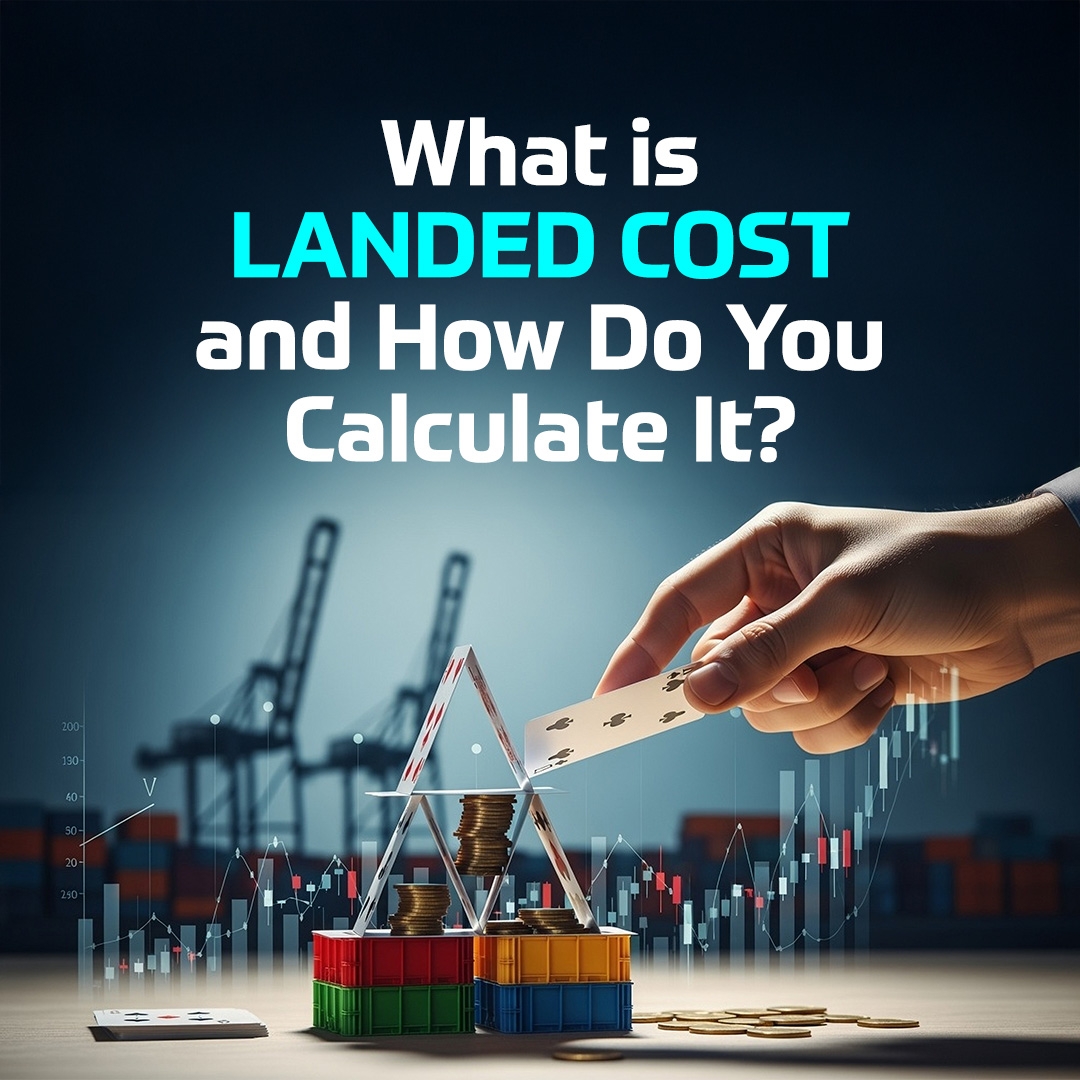
Understanding the landed cost is essential for businesses engaged in global trade. Whether you are an importer, exporter or logistics expert, having a clear sense of how much a product truly costs when it arrives at its final destination determines your pricing strategy, profitability and long-term competitiveness. In international commerce, the landed cost meaning goes far beyond the factory price or shipping fee. It represents the complete end-to-end cost structure that transforms a product from a supplier’s warehouse into your inventory. This comprehensive guide explains what landed cost is, how it works and how to calculate landed cost accurately.
1. What is Landed Cost?
The landed cost meaning in business
refers to the total cost of purchasing, shipping, importing and receiving goods
at their final destination. In simple terms, it includes every expense incurred
from the moment the product leaves the seller’s facility until it reaches the
buyer’s warehouse.
The total landed cost typically includes the
product’s base price, transportation, duties, taxes, insurance, handling fees,
port charges and other associated expenses. Because these factors vary by
country, commodity type and mode of transportation, importers must conduct a
thorough landed cost computation to avoid hidden expenses and maintain
profitability.
2. What are the Cost Components of Landed Cost?
The landed cost consists of several components.
Understanding each one is critical for accurate forecasting, budgeting and
managing your supply chain. Common cost components include:
Product Cost: This is the original first cost or invoice
price that you pay to the supplier. Depending on your agreement, this may
include packaging, inland freight or other supplier-side fees.
Freight Costs: International shipping charges vary widely
based on distance, transportation mode (air, sea, road, rail), shipment volume
and Incoterms. Freight is often the largest component of the estimated
landed cost.
Customs Duties and Taxes: Countries impose import duties,
VAT/GST, excise taxes and other regulatory fees. These charges depend on the
product’s HS code, value and the importing country’s tariff system.
Insurance: Cargo insurance protects against loss or
damage during transportation. While not mandatory, most importers include
insurance to ensure accurate landed cost computation.
Handling and Port Charges: These include terminal handling
charges (THC), unloading, container fees, storage and documentation fees at
ports and airports.
Brokerage Fees: Customs brokers often charge service fees for
completing import documentation and ensuring compliance with customs
regulations.
Miscellaneous Costs: These may include inspection fees,
quality check costs, currency exchange fluctuations or inland transportation at
the destination.
Together, these expenses form the landed
cost factor that businesses use to measure true product cost and final
profitability.
3. First Cost vs Landed Cost
The first cost refers only to the initial
purchase price paid to the supplier. It does not include freight, insurance,
customs duties or additional expenses. Many businesses mistakenly evaluate
suppliers or calculate profitability based solely on the first cost, which
leads to inaccurate financial planning.
In contrast, the landed cost reveals the actual
cost of goods upon arrival at your facility. This means the landed cost
provides a much clearer picture of your operational expenses, margins and
pricing decisions.
A useful landed cost example is when a
product priced at $10 from the supplier ends up costing $18 after transport,
tariffs and additional handling fees. Without analyzing the full landed cost,
you may significantly underestimate your cost of goods.
4. How Do You Calculate Landing Cost?
To ensure accuracy, businesses should follow a
structured approach for landed cost computation. The calculation involves
identifying all cost components, applying duty rates and combining them into a
final figure. Many companies use a landed cost calculation template to
avoid errors and standardize the process.
Key steps include:
- Determine the product’s first cost (invoice
price).
- Calculate international freight and
insurance.
- Apply customs duties using the HS code.
- Add taxes, handling fees and brokerage
charges.
- Combine all values to find the total
landed cost.
4.1. Landed Cost Formula
The basic landed cost formula looks like
this:
Landed Cost = Product Cost + Freight + Insurance + Customs
Duties + Taxes + Handling Charges + Other Fees
Businesses sometimes use a more detailed
version depending on their industry and import complexity. Regardless of the
variations, this formula for landed cost helps determine the product’s
true cost.
5. Why is Landed Cost Important?
Understanding the landed cost is critical for
importers because it allows them to accurately evaluate their true expenses,
set profitable pricing strategies and avoid unexpected financial losses. By
knowing the full landed cost meaning, businesses can compare suppliers more
realistically, since a lower invoice price does not always equal a lower total
landed cost once freight, duties and additional fees are included. It also
supports better inventory planning and financial forecasting by providing a clearer
picture of operational costs. Moreover, calculating an accurate estimated
landed cost helps companies remain compliant with customs requirements, avoid
penalties and enhance their overall profitability by identifying cost-saving
opportunities across the supply chain.
6. Landed Cost vs FOB
FOB (Free on Board) indicates that the seller
delivers the goods to the port of shipment, and the buyer takes responsibility
from that point onward. Under FOB terms, the buyer covers international
freight, insurance, duties and all destination charges.
The difference between FOB and landed cost lies
in the scope. FOB is an Incoterm specifying the transfer of responsibility,
while landed cost represents the full calculation of all costs required to
bring goods to your warehouse.
Although the two concepts are often compared,
they serve different purposes: FOB defines responsibility; landed cost defines
financial reality.
7. Landed Cost vs Cost of Goods Sold
Cost of Goods Sold (COGS) refers to the direct
costs of producing or procuring goods that a company sells. It usually includes
materials, direct labor and overhead, depending on the accounting method.
The landed cost may be incorporated into COGS
if the goods are intended for resale. However, the landed cost is specifically
tied to import logistics, customs and transportation. Not all elements of COGS
are related to importation, and not all elements of landed cost relate to
product manufacturing.
Thus, landed cost is a key component of COGS
for importers, influencing pricing, profitability and financial reporting.
8. Using TradeAtlas Data to Improve Landed Cost Accuracy
TradeAtlas offers access to millions of
international trade records collected from official customs data and verified
bill of lading documents. By analyzing global shipments, product flows, price
trends and supplier information, businesses gain valuable insights to better
estimate their landed cost.
With TradeAtlas, users can:
- Identify average shipping costs for specific
products,
- Compare supplier prices and shipment
quantities,
- View which companies import or export certain
goods,
- Evaluate global trade patterns for better
demand forecasting,
- Benchmark their estimated landed cost using
real shipment data.
This helps companies create a more reliable
landed cost calculation template and make data-driven supply chain decisions. With
TradeAtlas’ comprehensive customs
info database,
users can easily access detailed import duties, trade flows and official
customs records from countries around the world.
9. FAQ About Landed Cost
Understanding the landed cost meaning can
sometimes be confusing for importers, especially when dealing with multiple
fees, taxes and logistics charges across different countries. This FAQ section
provides clear and concise explanations to help businesses better interpret
landed cost computation, avoid miscalculations and apply the correct landed
cost formula when evaluating international shipments.
9.1. What is a landed cost?
A landed cost is the complete cost of importing
goods, including product price, transportation, insurance, duties, taxes and
handling fees.
9.2. How do you calculate landing cost?
You calculate landed cost by adding the first
cost, freight, insurance, customs duties, taxes and all destination charges
using a standard landed cost formula.
9.3. What is the difference between FOB and landed cost?
FOB refers to the point where responsibility
transfers from seller to buyer, while landed cost includes every expense
required to bring goods to the buyer’s warehouse.
9.4. What is another name for landed cost?
Another name for landed cost is “total
delivered cost” or “true product cost", as it reflects the full expense of
receiving imported goods.