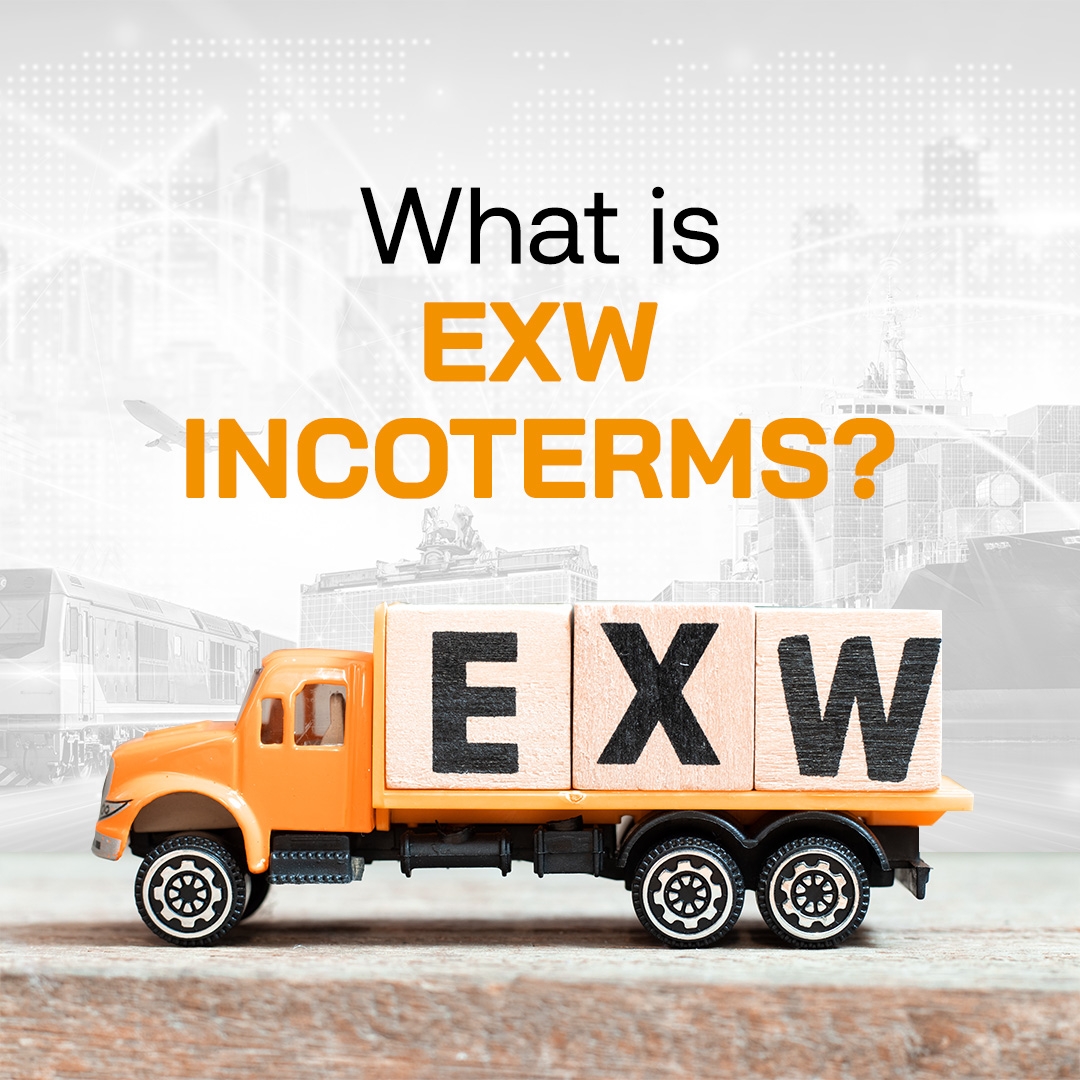
In international trade, understanding Incoterms (International Commercial Terms) is crucial for both buyers and sellers. These rules, published by the International Chamber of Commerce (ICC), define the responsibilities, risks and costs involved in the transportation of goods. Among them, EXW Incoterms (Ex Works) is one of the simplest yet most significant terms, shaping the foundation of global trade negotiations. This guide provides the EXW Incoterms definition, explores its meaning, advantages, disadvantages and compares it with other key terms such as FOB and FCA.
1. What Does Ex Works Mean in Incoterms?
The EXW Incoterms meaning is
straightforward: the seller fulfills their responsibility once the goods are
made available at their premises (factory, warehouse or another agreed
location). From this point, the buyer assumes all costs, risks and logistics
related to transportation.
In other words, EXW meaning is that the
seller’s duty is minimal; they only need to make the goods accessible, while
the buyer takes care of everything else, including loading, shipping, customs
clearance and final delivery.
2. What Does Ex Works Mean for Shipping?
When applied to shipping, EXW shipment places
the entire burden on the buyer. The buyer must arrange for vehicles to pick up
the goods, load them onto transport, handle export documents and pay for
freight, insurance & duties.
This makes EXW meaning in shipping more
favorable for sellers, especially small manufacturers who prefer not to handle
complex logistics. However, for buyers, it requires strong logistics expertise
and reliable freight forwarders.
3. Why is Important Ex Works?
The EXW Incoterms explained principle is
important because it defines a clear boundary of responsibility between buyers
and sellers. For sellers, it reduces risk and obligations. For buyers, it
offers full control over shipping, choice of freight forwarders and potentially
lower costs if managed efficiently.
In competitive markets, choosing EXW can give
buyers leverage in negotiating transport and insurance rates. However, it also
increases exposure to risks if logistics are not handled properly.
4. Responsibilities Under Ex Works
The essence of EXW Incoterms lies in dividing
responsibilities. Let’s look at them separately:
4.1. Buyer's Responsibilities
General buyer’s responsibilities are:
- Arranging pick-up and loading of goods.
- Handling export licenses, permits and customs
declarations.
- Paying for freight, insurance and import
duties.
- Managing delivery to the final destination.
4.2. Seller's Responsibilities
General seller’s responsibilities are:
- Making the goods available at the agreed
place.
- Providing necessary documentation (invoice,
packing list, certificates, etc.).
- Informing the buyer when goods are ready.
The seller has no obligation to load the goods
or handle export formalities unless otherwise agreed.
5. Advantages and Disadvantages of Ex Works
When looking at the EXW Incoterms meaning, it
becomes clear that this trade term creates a balance of benefits and challenges
depending on the party involved. While sellers gain simplicity and reduced
obligations, buyers face higher control but also greater risk and
responsibility in managing the EXW shipment process.
Advantages of EXW:
- Simple and minimal responsibility for the
seller.
- Buyers have complete control over the
shipping process.
- Flexibility to negotiate better freight
rates.
- Useful for buyers with strong logistics
networks.
Disadvantages of EXW:
- Higher responsibility and risk for buyers.
- Complex export procedures may be challenging.
- Possible misunderstandings about loading
obligations.
- Buyers may face unexpected costs if logistics
are not well managed.
6. What Is the Difference Between Ex Works and FOB?
EXW vs FOB is one of the most common
comparisons in trade. Under FOB (Free on Board), the seller is responsible for
delivering goods onto the buyer’s nominated vessel at the port of shipment. In
contrast, under EXW Incoterms, the seller’s responsibility ends much earlier,
when goods are made available at their premises.
For buyers with limited logistics experience,
FOB is often safer. For sellers seeking minimal responsibility, EXW is more
advantageous.
7. What Is the Difference Between Ex Works and FCA?
Another frequent comparison is EXW vs FCA. FCA
(Free Carrier) requires the seller to deliver goods to a carrier at a specific
location and handle export customs clearance. This makes FCA more balanced, as
sellers share part of the shipping responsibility.
By contrast, in EXW Incoterms, the seller
avoids customs clearance duties and leaves all risks and costs to the buyer.
8. Using TradeAtlas for EXW Shipments
When dealing with EXW shipment
arrangements, having access to accurate trade data is vital. With TradeAtlas,
businesses can analyze global buyer and supplier information, track
competitors' shipments and verify global import export data using HS codes for compliance. Whether you are a buyer managing an EXW
meaning in shipping contract or a seller evaluating export opportunities,
TradeAtlas helps simplify decisions and minimize risks in international trade.
9. EXW Incoterms FAQ
The following frequently asked questions
provide a simple yet practical way to understand EXW Incoterms explained in
real trade situations. By reviewing these answers, both buyers and sellers can
quickly grasp the EXW Incoterms meaning, clarify responsibilities and avoid
common misunderstandings in international shipping.
9.1. What does EXW mean in shipping terms?
It means the seller only makes goods available
at their premises, while the buyer handles transportation, insurance and
customs from start to finish.
9.2. Who pays for shipping on EXW?
Under EXW Incoterms, the buyer is responsible
for all shipping costs, including loading, freight and duties.
9.3. What is better, FOB or EXW?
It depends on the situation. FOB is better for
buyers with less logistics experience, while EXW is better for sellers who want
minimal responsibility.
9.4. Which is better between EXW and CIF?
CIF (Cost, Insurance and Freight) places more
responsibility on the seller, as they arrange and pay for shipping up to the
port of destination. EXW, on the other hand, shifts all costs and risks to the
buyer.
The EXW Incoterms definition highlights a
simple yet powerful trade agreement where sellers minimize their obligations,
and buyers take control of shipping and costs. While it offers advantages like
flexibility and reduced risk for sellers, it can be challenging for buyers
without logistics expertise.
By understanding the EXW Incoterms explained
framework and leveraging trade data tools like TradeAtlas, businesses can make
informed decisions, manage risks and succeed by reaching the right import export companies in international trade.