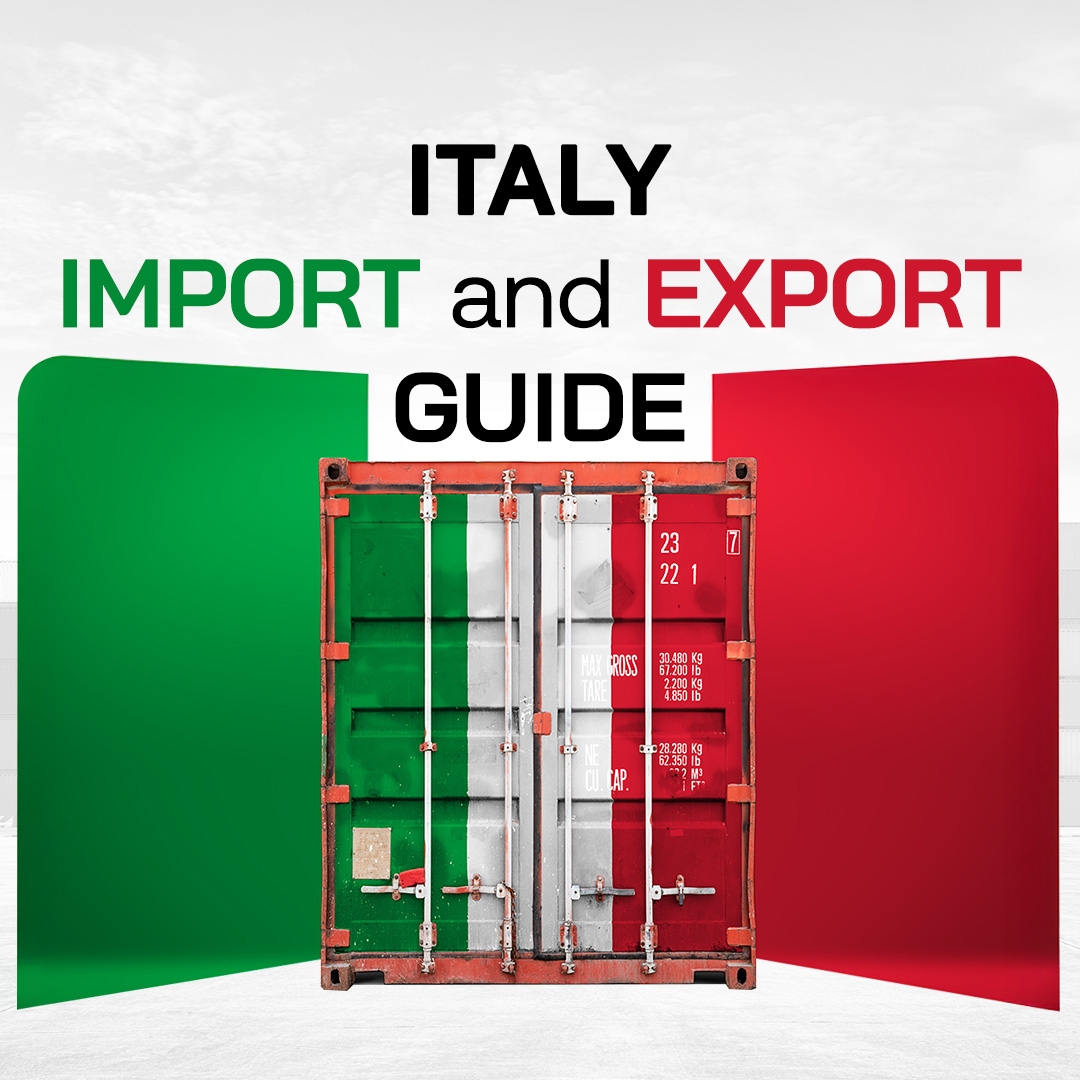
Italy is one of Europe’s most dynamic trading nations, well known for its advanced manufacturing sectors, luxury brands, agricultural products and high-value industrial machinery. As the world’s eighth-largest economy, Italy maintains a robust presence in global trade, supported by its strategic location at the crossroads of Europe and the Mediterranean. This comprehensive guide explores the Italy import export landscape, key industries, major markets and how businesses can successfully start trading with or within Italy. Whether you are an exporter targeting Italian buyers or a company seeking new international opportunities, understanding the import and export of Italy is essential.
1. Italy Export Import Overview
Italy has a long tradition of international
commerce driven by sectors such as machinery, automotive, fashion,
pharmaceuticals and food processing. The country’s highly diversified economy
allows it to export a wide range of goods while also importing raw materials
and strategic products to support domestic industries.
In terms of exports, Italy is recognized
globally for its high-quality design, engineering and craftsmanship. Many
foreign markets consider Italian products, especially machinery, food, luxury
goods and textiles, as premium offerings. These strengths explain why Italy
export goods consistently perform well in global markets.
On the import side, imports in Italy
include energy resources (like natural gas and crude oil), industrial inputs,
vehicles, chemicals and agricultural commodities. Given Italy’s limited natural
resources, strategic imports play an important role in supporting manufacturing
and industrial production.
Overall, the healthy balance between import
Italy activities and export performance makes the country one of the most
influential trading economies in the EU.
2. Italy Import Export Data & Trends
Italy continues to maintain strong trade flows
with Europe, Asia and North America. As a member of the EU single market, Italy
benefits from tariff-free trade with other member states and strong integration
with European supply chains.
Recent data shows continued growth in
high-value exports such as pharmaceuticals, automotive components, machinery
and specialized industrial equipment. Meanwhile, increases in imported raw
materials, energy products and electronics reflect Italy’s manufacturing-driven
economy.
2.1. Italy Export Data
Italy’s export portfolio is one of the most
diversified in the world. Some of the top categories include:
- Industrial machinery and mechanical
appliances
- Vehicles and automotive parts
- Pharmaceuticals and medical products
- Clothing and luxury fashion items
- Processed food, wine and olive oil
A key question many traders ask is: “What
does Italy export the most?”
The answer depends on the methodology, but
machinery consistently ranks as the number one category in the Italy export
market, followed by vehicles, metals, pharmaceuticals and premium consumer
goods.
Italy exports primarily to European countries,
with Germany, France, Switzerland, Spain and the United States ranking among
the largest destinations for exports to Italy (i.e., exports from Italy
to these markets).
These sectors reinforce Italy’s reputation as a
global leader in engineering, luxury design, automotive technology and
high-quality food products.
2.2. Italy Import Data
The main imports of Italy reflect the
country’s industrial structure and its reliance on external resources. These
include:
- Crude oil, refined petroleum and natural gas
- Chemicals and pharmaceutical ingredients
- Electronics and electrical machinery
- Plastics and industrial raw materials
- Agricultural products such as grain and soy
When examining what Italy imports, it is clear
that the country depends heavily on energy and raw materials to support
manufacturing. Because Italy does not have abundant natural resources, imported
energy plays a vital role in powering its industries and transportation
networks.
The major imports of Italy are sourced from
countries such as Germany, China, France, the Netherlands and Spain. Non-EU
suppliers like the United States, Turkey and Algeria also play a significant
role, particularly in supplying raw materials and energy products.
3. How to Start an Import Export Business in Italy?
Starting an Italy import export business
requires a combination of market research, legal compliance and strategic
planning. Italy is part of the European Union, so traders benefit from
harmonized customs procedures, simplified regulations and access to more than
450 million consumers within the EU market.
Here are the essential steps:
1. Understand Italian Trade Regulations: Italian customs procedures follow
EU legislation. Businesses must ensure compliance with product standards,
labeling rules, VAT obligations and safety requirements.
2. Register a Business in Italy: Foreign investors can establish
various business types such as SRL (limited liability company) or branch
offices. Non-EU companies must obtain a VAT number and complete local
registration steps.
3. Identify Trading Opportunities: Conduct market research to
determine which goods have strong demand. Tools such as TradeAtlas help
businesses explore Italy import partners, competitive markets and
product-level trade flows.
4. Build a Supplier or Buyer Network: Companies must identify reliable
trade partners, whether they are Italian manufacturers or foreign suppliers of
raw materials. Digital trade databases simplify this process.
5. Ensure Logistics and Customs Planning: Italy offers several major ports,
such as Genoa, Trieste and Livorno, making it an ideal entry point for goods
moving into the EU. Efficient logistics planning is vital for maintaining cost
control.
4. Which Countries Import the Most from Italy?
Italy exports heavily to allies and partners
within Europe and beyond. The top destinations for Italian goods include:
- Germany
- France
- United States
- Switzerland
- Spain
- United Kingdom
- China
These markets absorb the majority of high-value
Italy export goods, especially machinery, vehicles, chemicals, fashion
items and luxury products.
When examining export Italy flows, the
largest importers of Italian goods are again Germany, France, the United States
and Switzerland. These countries consistently rank as Italy’s most important
partners due to their advanced industrial sectors and strong consumer markets.
European partners dominate Italy’s export
landscape because of logistical proximity, integrated supply chains and shared
EU regulatory frameworks. However, exports to the United States and China show
steady growth, particularly in luxury products, automotive items and
pharmaceuticals.
5. Major Import Partners of Italy
Italy relies on a diverse group of
international suppliers to meet its industrial, technological and
energy-related needs, making its global sourcing network essential for
sustaining domestic production. Among the major imports of Italy,
Germany stands out as the country’s leading partner, providing high-value
machinery, automotive components and chemicals used widely across Italian
manufacturing sectors.
China is another critical supplier, exporting
electronics, electrical machinery and a broad range of consumer goods that
support both industrial and retail demand.
France contributes significantly through
petroleum products, industrial materials and chemical inputs, while the
Netherlands remains a key hub for energy imports due to its strategic trading
infrastructure. Spain also plays an important role, supplying vehicles,
agricultural goods and intermediate materials.
Beyond Europe, Italy depends on countries like
Algeria and Russia for natural gas and other energy resources, Turkey for
metals and textiles, and the United States for advanced technology and
pharmaceutical products. Together, these Italy import partners reinforce the
country’s interconnected position in global supply chains and ensure steady
access to the main imports of Italy across multiple sectors.
6. Italy Imports by Country
Understanding imports in Italy by country helps
businesses identify opportunities in sectors where Italy relies heavily on
foreign suppliers. For example:
- Energy imports come largely from Algeria,
Russia and Azerbaijan.
- Automotive components and industrial
equipment are sourced from Germany and France.
- Electronics and machinery often arrive from
China and Japan.
- Agricultural imports such as grains originate
from Ukraine, the U.S. and other global producers.
This breakdown provides valuable insight into what
Italy imports and helps exporters target Italian buyers more effectively.
7. Using TradeAtlas to Explore Italy’s Global Trade Data
To make informed decisions in the import and
export of Italy, businesses need access to accurate, comprehensive and real
foreign trade data. TradeAtlas provides one of the world’s most extensive import export database, covering more than 200 countries
and billions of trade records.
With TradeAtlas, users can:
- Identify Italian buyers and suppliers by
product,
- Analyze Italy import export trends,
- Track global shipments connected to Italy,
- Discover major imports of Italy and
top-performing export categories.
- Explore competitors, emerging markets and
pricing patterns.
This data-driven approach allows businesses to
optimize their sourcing strategies, find new customers and confidently enter
international markets.