When entering international markets, one of the most important compliance requirements for manufacturers is obtaining CE certification. For businesses, understanding the CE certification meaning, requirements and process can be the difference between seamless market access and costly delays. This guide explains everything you need to know, from how to define CE certification to exploring its importance in Europe and beyond.
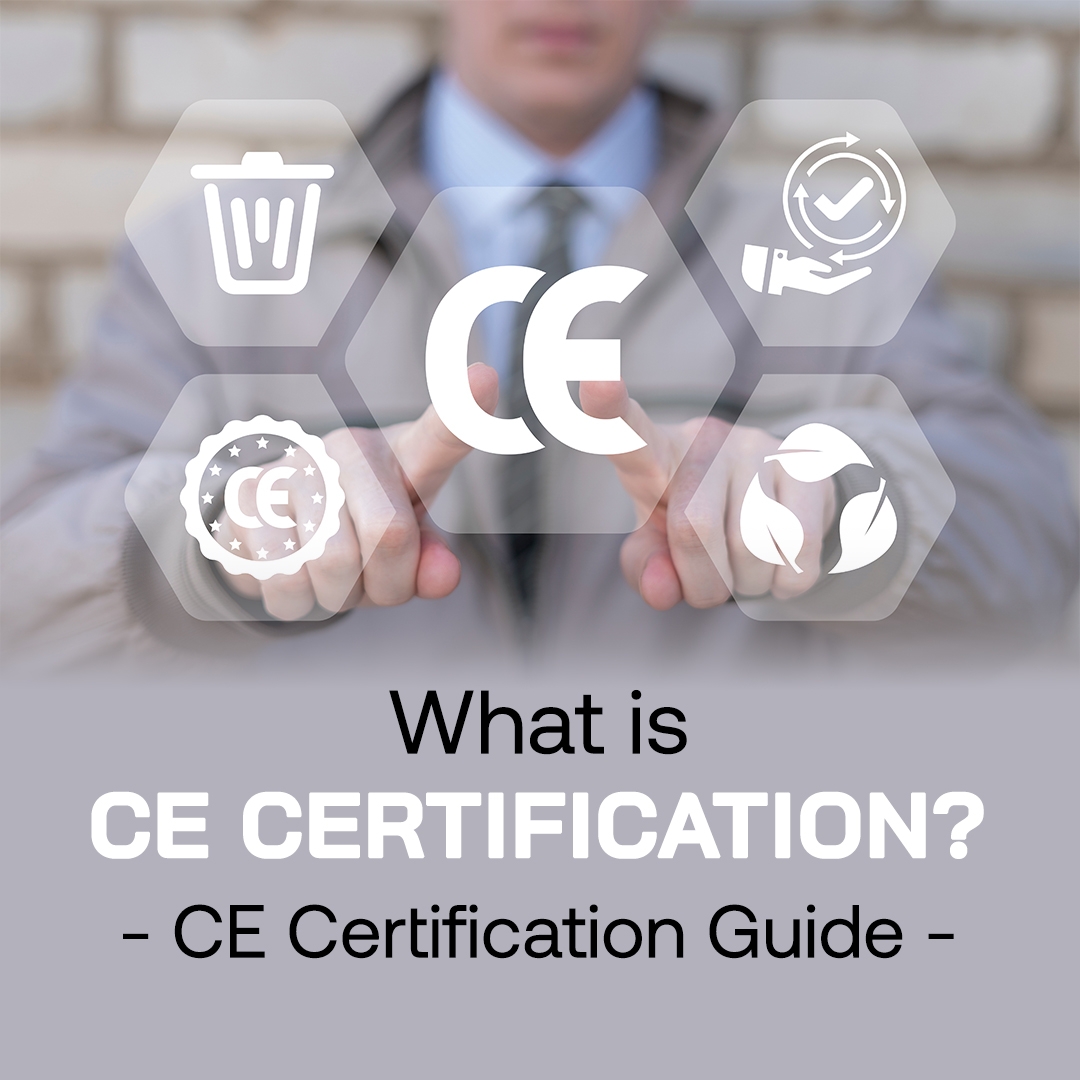
1. What Are CE Markings?
The CE marking is a symbol placed on products
to indicate compliance with European health, safety and environmental
protection standards. The CE certification symbol shows that the
manufacturer has carried out the necessary CE certification testing and that
the product meets all applicable CE certification directives.
In simple terms, the CE marking is like a
passport for products, allowing them to circulate freely in the European
Economic Area (EEA). Manufacturers use it to assure authorities and consumers
that their products have undergone the correct conformity assessments.
Importantly, the CE mark is not a quality assurance symbol; rather, it confirms
that minimum regulatory requirements are met.
2. How Do You Get CE Certification?
The process of obtaining CE certification
involves several steps. First, companies must identify which CE certification
directives apply to their product. Different categories of goods, such as
machinery, electronics and medical devices, have specific regulations.
Next, businesses must complete CE
certification testing, either in-house or with accredited labs, to prove
compliance with the relevant requirements. After testing, a technical file is
prepared that documents results, risk assessments and design details.
For certain high-risk products, third-party CE
certification consultants or “Notified Bodies” are required to verify
conformity. Once compliance is confirmed, the manufacturer can issue a
Declaration of Conformity (DoC) and affix the CE mark. At this stage, the
product also receives a CE certification number linked to its documentation.
3. What are CE Certification Requirements?
To achieve certification, manufacturers must
ensure that their products align with legal requirements covering health,
safety and environmental standards. Core CE certification requirements include:
- Identifying and applying the right CE
certification directives.
- Conducting and passing CE certification
testing.
- Preparing technical documentation stored in a
CE certification database.
- Ensuring traceability through a valid CE
certification number.
- Having compliance verified by accredited CE
certification services when necessary.
Documentation must be kept up to date because
regulatory bodies can conduct a CE certification check at any time.
4. Why Do Products Need CE Certification?
Products require CE certification for multiple
reasons:
Market Access: It is mandatory to sell many types of products
within the EEA.
Consumer Trust: The CE certification symbol reassures buyers
of safety and compliance.
Legal Compliance: Avoids penalties, recalls or being banned from
markets.
Competitive Edge: Certified products are often preferred by
distributors and partners.
For exporters, obtaining CE approval also
supports global market expansion, since many non-EU countries recognize or
align their standards with CE regulations.
5. Country-Specific CE Certifications
While the CE mark follows a common framework,
country-specific CE certifications often involve additional steps or
recognition processes. Importers and exporters should be aware that
regulations, documentation and even the CE certification price may vary
depending on the target market, making it important to plan ahead with expert
guidance.
5.1. Australia CE Certification
While Australia has its own compliance
frameworks, many products entering the market follow similar testing and safety
rules to CE. Exporters often work with CE certification consultants to align
Australian approvals with European standards.
5.2. CE Certification Europe
Europe is the birthplace of CE marking.
Products sold in EU member states must undergo strict CE certification testing
based on relevant directives. Authorities frequently perform a CE
certification check to ensure compliance. The European Union maintains a CE
certification database for public and regulatory use.
5.3. CE Certification Canada
Canada has its own approval systems, but
CE-marked goods are often accepted if they meet Canadian safety requirements.
Importers benefit from conducting a CE certification search before
shipping to ensure compatibility.
6. CE Mark vs China Export
A common source of confusion is the similarity
between the CE mark and the so-called “China Export” logo. The CE mark
indicates compliance with European directives, while the China Export logo
simply signifies that a product was manufactured in China.
Manufacturers should carefully use the official
CE certification symbol, as mislabeling may mislead consumers and cause legal
complications. Authorities often verify through the CE certification number and
CE certification database to confirm authenticity.
7. RoHS and CE Certification?
RoHS (Restriction of Hazardous Substances) is a
European directive that limits the use of specific toxic materials in
electrical and electronic products. RoHS compliance is often linked to CE
marking, especially for electronics.
Products must meet both RoHS and CE
requirements before being sold in the EEA. This means additional CE
certification testing is usually required to verify that restricted substances
are not present. Many businesses rely on specialized CE certification services
to streamline both approvals.
8. TradeAtlas: CE Certification and Global Trade
Whether you are a manufacturer or distributor,
staying compliant with CE requirements is critical for successful exports.
TradeAtlas helps businesses navigate global compliance by providing access to
detailed global
trade data divided
by HS codes and verified buyers and suppliers.
Through TradeAtlas, you can complement your CE
certification search with real trade data, track competitors and expand into
new markets with confidence. Just as the CE mark provides trust in product
compliance, TradeAtlas provides trust in trade intelligence.
9. CE Certification FAQ
The CE certification process can be complex,
and businesses often have recurring questions about documentation,
responsibilities and compliance.
9.1. What does CE document mean?
The CE document, or Declaration of Conformity
(DoC), is an official paper issued by the manufacturer stating that the product
complies with all applicable CE certification directives.
9.2. Who can issue a CE Certificate?
Manufacturers can issue a CE certificate
themselves after fulfilling the requirements. For some high-risk categories,
accredited CE certification services or Notified Bodies must be
involved.
9.3. What is the difference between CE Certificate and DoC?
The CE Certificate is often a formal approval
provided by third-party CE certification consultants, while the DoC is a
self-issued document by the manufacturer. Both reference the CE certification
number and related testing.
9.4. What does CE certified stand for?
CE certified means the product has undergone
the necessary CE certification testing and complies with European standards for
safety, health and environment. In other words, the product meets the
recognized CE certification meaning and can legally be sold in the EU.
Understanding and obtaining CE certification is
essential for any business aiming to succeed in European and global markets.
From identifying the right CE certification directives to handling CE
certification cost and working with CE certification consultants, every
step ensures compliance and market readiness.
With the right guidance and resources, like
TradeAtlas for global market insights, you can simplify the certification
process, reduce risks and build trust with customers worldwide.