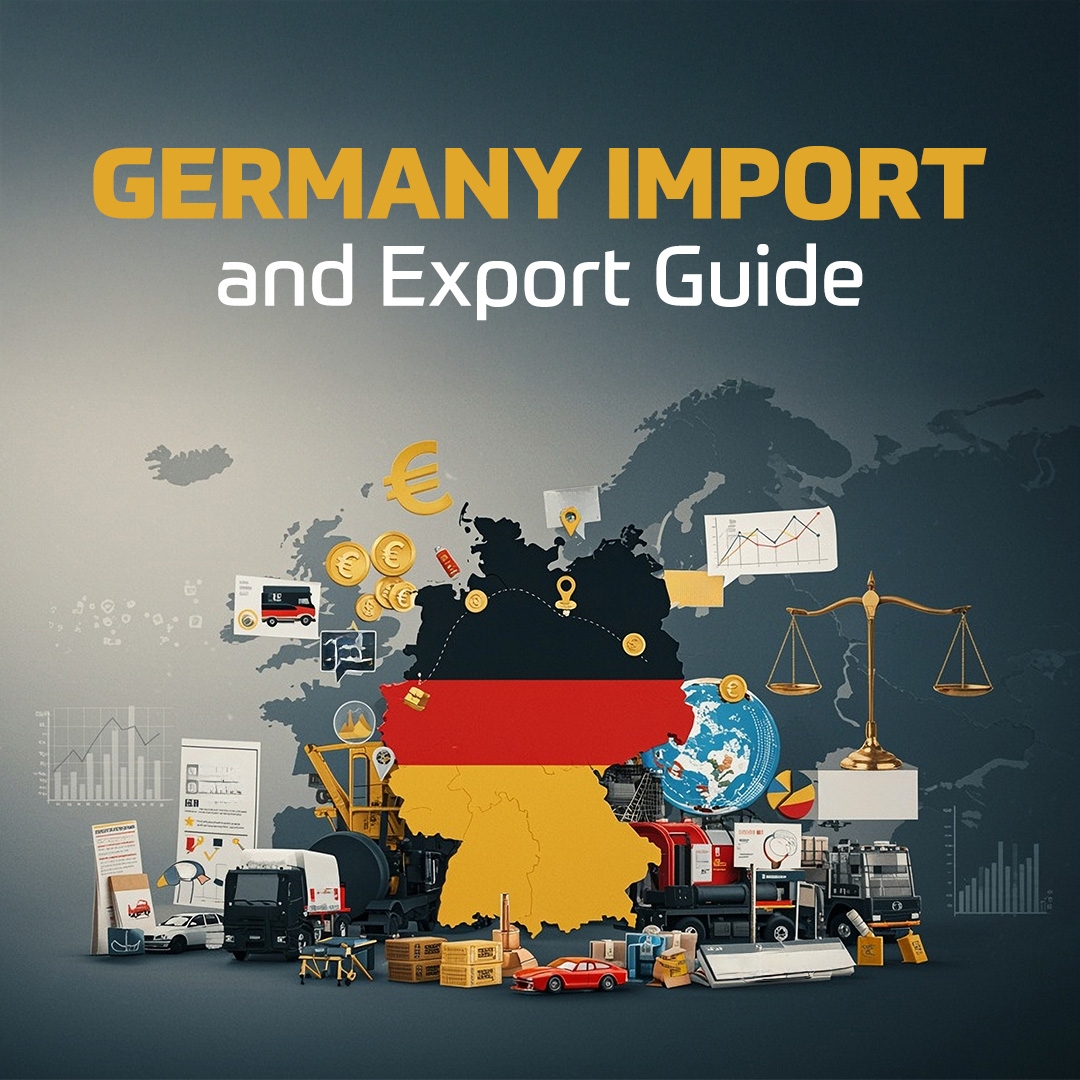
Germany stands as one of the world’s leading trade nations, renowned for its engineering excellence, export-driven economy and powerful industrial base. As a core member of the European Union and the largest economy in Europe, Germany’s global trade influence stretches from automobiles and machinery to chemicals and consumer goods. This comprehensive Germany import export guide explores the country’s trade data, key export partners and how businesses can enter this thriving market.
1. Germany Export Import Overview
Germany’s economy thrives on international
trade. With exports accounting for nearly half of its GDP, the country’s
industrial performance strongly influences the European and global markets. The
nation’s Germany import and export data highlight its dominant position
in machinery, vehicles, and chemicals exports, while energy, raw materials and
electronics form the bulk of its imports.
The country’s success lies in its ability to
maintain a balance between imports and exports through innovation, efficiency
and strong partnerships with both developed and emerging economies. Germany
export import statistics show that its trade network includes more than 200
countries, making it one of the most globally connected nations in the world.
2. Germany Import Export Data & Trends
Germany remains one of the top three exporters
and importers globally. Its trade surplus consistently ranks among the highest
worldwide. According to recent Germany export value reports, exports
reached hundreds of billions of euros annually, with industrial goods leading
the way.
Let’s take a closer look at export and import
data separately.
2.1. Germany Export Data
Germany’s exports are known for their high
quality and technological sophistication. The Germany export value continues to
rise, driven primarily by machinery, motor vehicles, chemical products and
electronics. The automotive industry alone accounts for more than 15% of total
exports, making Germany home to global giants like Volkswagen, BMW and
Mercedes-Benz.
Additionally, pharmaceuticals, medical devices
and precision instruments have shown significant growth over the past decade.
The strong reputation of “Made in Germany” contributes to the continuous demand
for German goods in both developed and emerging markets.
2.2. Germany Import Data
Germany’s imports play an equally important
role in supporting its manufacturing sector. Germany's top import
categories include energy sources such as oil and natural gas, industrial
machinery components, electronics and food products. As the country transitions
toward renewable energy, imports of solar panels, batteries and green
technologies have increased substantially.
The Germany imports by country data shows
that most imports come from neighboring EU countries, particularly the
Netherlands, France and Poland, as well as major global suppliers like China
and the United States. This interdependence supports Germany’s position as the
production hub of Europe.
3. How to Start an Import Export Business in Germany?
Starting an import or export business in
Germany requires understanding both EU and national trade regulations.
Entrepreneurs should begin by registering their company and obtaining a tax
identification number (USt-IdNr).
Key steps include:
- Market Research: Analyze demand,
competitors and target markets using a list of import and export companies in
Germany for benchmarking.
- Compliance: Learn about Germany
import regulations, including customs duties, product standards and EU
certifications.
- Logistics: Set up efficient logistics
through German ports such as Hamburg or Bremen.
- Digital Presence: Use trade platforms
like TradeAtlas to identify potential buyers and suppliers.
Businesses entering the German market benefit
from transparent laws, advanced infrastructure and access to the EU’s single
market of over 400 million consumers.
4. Which Countries Import the Most from Germany?
Germany’s primary export destinations include
the United States, France, the Netherlands, China and Poland. According to the
latest Germany export import statistics, the U.S. remains Germany’s top single
export market, accounting for a significant share of machinery, automotive
parts and chemical products.
European neighbors such as France and the
Netherlands follow closely, reflecting Germany’s integrated role within the EU
supply chain. Asian markets, particularly China and South Korea, continue to
grow due to rising demand for German technology and industrial goods.
5. Major Import Partners of Germany
When analyzing Germany's import-export
relationships, China has emerged as Germany’s largest import partner. China
supplies a wide range of goods, including electronics, textiles and industrial
components. The Netherlands, Poland and France also rank among the top partners
due to geographic proximity and EU integration.
The German import and export data further
reveal that Russia previously played a major role in energy imports, but recent
geopolitical developments have shifted Germany’s sourcing toward other regions,
such as Norway, the United States and Middle Eastern suppliers.
6. Germany Imports by Country (Top 10)
The following countries are Germany’s top
import partners, representing both regional and global trade connections:
1. China – Electronics, machinery and textiles
2. Netherlands – Chemicals, fuels and machinery
3. Poland – Automotive parts, food and
industrial components
4. United States – Technology, aircraft and
medical devices
5. France – Energy products, vehicles and
consumer goods
6. Italy – Machinery, textiles and luxury items
7. Czech Republic – Automotive parts and
electronics
8. Belgium – Chemicals and raw materials
9. Austria – Industrial machinery and processed
goods
10. Spain – Automotive and agricultural
products
These Germany imports by country highlight the
diversity and resilience of Germany’s supply chain.
7. TradeAtlas: The Smart Way to Explore Germany’s Trade Data
Access to accurate trade data is essential for
any business seeking opportunities in Germany. With TradeAtlas, companies can
analyze Germany's import and export data, identify reliable partners and
monitor competitors in real time.
By using TradeAtlas, you can:
- Access the list of import and export
companies in Germany,
- Discover Germany’s major exports and
their buyers worldwide,
- Evaluate Germany's import regulations to
ensure compliance,
- Monitor Germany export import statistics to
understand emerging trends.
Whether you’re looking for buyers of German
machinery or suppliers of electronics, TradeAtlas provides a complete view of
the market, helping you make informed decisions in international trade.
8. Germany Export Import FAQ
In global trade discussions, one of the most
common questions involves how Germany’s trade compares with other major
economies. For example, businesses often analyze China
import export trends alongside Germany’s data to identify global market
opportunities. This comparison helps traders understand demand shifts, supply
chains and potential partnerships between the two export-driven nations.
8.1. What are Germany's main imports and exports?
Germany’s top exports include automobiles,
machinery, chemical products and medical equipment. Meanwhile, its top imports
are raw materials, electronics and energy resources. These Germany top
imports and exports reflect the country’s strong industrial focus and
dependence on high-value manufacturing.
8.2. What is Germany's #1 export?
The #1 export of Germany is automobiles. Brands
such as Volkswagen, BMW and Mercedes-Benz dominate global car markets.
Automotive exports account for a major portion of Germany's export value,
supported by precision engineering and advanced manufacturing technology.